Plan Your Project
Bring this design into your kitchen.
Free 30-minute design consultation at our Boynton Beach showroom. See the slabs, talk through your kitchen, and get a real timeline + ballpark.
★★★★★ 5.0 · 587+ Google reviews · Family-owned since 2008
Defining Transitional Style in Kitchen Design
Transitional design occupies the sophisticated middle ground between traditional and contemporary aesthetics, combining the warmth and detail of classic design with the clean lines and restraint of modern style. This approach has become dominant in Palm Beach County's luxury residential market, appealing to homeowners who find pure contemporary too stark and traditional too ornate. Transitional kitchens feature Shaker or flat-panel cabinetry rather than heavily detailed raised panels, neutral color palettes with carefully chosen accent colors, mixed materials and finishes creating visual interest without overwhelming, and balanced proportions that feel neither heavy nor sparse. The style accommodates both formal entertaining and casual family life—a crucial consideration in South Florida where indoor-outdoor living and frequent hosting are lifestyle essentials. Countertop selections in transitional kitchens lean toward natural stone with classic appeal: marble and marble-look quartzite dominate, with Calacatta and Carrara patterns remaining perennially popular. However, the application differs from traditional kitchens—instead of ornate edge profiles and excessive ornamentation, transitional designs use simpler edges (straight, eased, or basic bullnose) and let the stone's natural beauty speak without embellishment. This restraint creates timeless appeal that transcends trends, a key benefit for homeowners planning to enjoy their kitchens for decades or positioning homes for eventual resale in competitive markets like Boca Raton, Jupiter, and Wellington.
Color Palettes: The Foundation of Transitional Design
Transitional kitchens build from neutral foundations with strategic pops of color and texture. The base typically features soft whites, warm grays, or greiges (gray-beige hybrids) on walls and cabinetry, creating a calm backdrop that won't date quickly. Countertops often provide the primary color statement—white marble or marble-look quartzite with gray veining remains the most popular choice, delivering visual interest through natural patterning rather than bold color. For clients wanting more drama, gray or charcoal cabinetry paired with lighter countertops creates sophisticated contrast without the stark black-and-white palette of contemporary design. Two-tone cabinetry is quintessentially transitional: white or light gray perimeter cabinets with a navy, forest green, or charcoal island creates focal point interest while maintaining overall neutrality. Countertop selection becomes crucial in two-tone schemes—marble or quartzite on the island draws attention to the cabinetry color, while perimeter counters in matching or complementary material unify the space. Backsplashes in transitional kitchens favor white or light gray in classic subway tile, clean white quartz, or glass, though some designers introduce pattern through cement tile or marble mosaics in muted colors. The restraint in color palette allows other elements—lighting fixtures, hardware, textiles—to provide accent colors that can be updated over time without requiring renovation. Throughout Palm Beach and Delray Beach, we see successful transitional kitchens in everything from crisp white monochromatic schemes to richer palettes incorporating warm woods and deeper cabinet colors, all unified by the balanced proportions and mixed materials characteristic of the style.
See the Slabs
Want to see what this looks like in your kitchen?
500+ slabs in our Boynton Beach showroom. Browse the live inventory or book a private viewing.
Countertop Materials That Define Transitional Aesthetic
Material selection is crucial in achieving transitional style's balanced aesthetic. White marble—particularly Calacatta and Statuario varieties—represents the gold standard, offering timeless elegance with enough natural variation to feel organic rather than sterile. The veining in Calacatta provides visual interest appropriate for transitional design's slightly dressed-down formality. For clients concerned about marble's maintenance requirements, quartzite in marble-look patterns (Taj Mahal, Sea Pearl, Cristallo) delivers nearly identical aesthetics with superior durability and stain resistance. These quartzites have become dominant in our Palm Beach County installations as they satisfy clients' desire for marble beauty without the committed maintenance. Engineered quartz in Calacatta patterns offers another alternative—consistent veining, zero porosity, and lower maintenance, though some designers find the manufactured uniformity less compelling than natural stone's organic variation. For darker schemes, gray or charcoal granite provides subtle sophistication, particularly in leathered finishes that add texture without high-maintenance honed marble. We're seeing increased interest in book-matched quartzite for island countertops—the symmetrical veining creates impact appropriate for transitional style's slightly elevated formality without crossing into traditional design's ornate territory. Edge profiles in transitional kitchens favor simplicity: straight edges with eased corners, pencil edge, or basic 1/4-inch radius bullnose. Avoid elaborate ogee, dupont, or heavily detailed edges that read as traditional. Thickness matters—3cm slabs provide the substantial appearance appropriate for transitional design's quality-focused aesthetic.
Cabinet and Hardware Selections
Cabinetry in transitional kitchens bridges styles through door style, finish, and hardware choices. Shaker doors—featuring a flat panel surrounded by a simple frame—are the quintessential transitional choice, offering more detail than flat-panel contemporary cabinets but less ornamentation than traditional raised panels. Finish selection leans toward painted cabinets in whites, soft grays, or carefully chosen deeper colors rather than stained wood finishes that read traditional, though some transitional kitchens successfully incorporate natural wood tones on islands or in open shelving for warmth. The key is balance—if countertops are dramatic (dark granite, heavily veined marble), cabinets should be simpler in color and style. If countertops are subtle (white quartz, consistent granite), cabinets can introduce more color or detail. Hardware selection significantly impacts the traditional-versus-contemporary balance. Classic pulls in brushed nickel, aged brass, or oil-rubbed bronze lean traditional, while clean linear pulls or minimal cup pulls in polished chrome or stainless push contemporary. Transitional designs often mix both: traditional knobs on doors, contemporary pulls on drawers, creating subtle variety. Many Palm Beach Gardens and Wellington clients select brass hardware with clean, simple lines—the warm metallic finish feels traditional while minimalist shapes read contemporary. Hardware finish should coordinate with plumbing fixtures and lighting—consistency across metals creates cohesion essential to transitional design's edited, intentional aesthetic.
Lighting and Fixtures as Style Indicators
Lighting selection powerfully communicates transitional design intent. Pendant fixtures over islands present the most visible opportunity—transitional designs favor fixtures with clean lines but some ornamentation, perhaps glass shades with metal frames in mixed finishes (brass with black accents, chrome with brass details). Avoid ultra-contemporary geometric forms or heavily traditional crystal chandeliers. Recessed lighting provides ambient illumination without visual clutter, very appropriate for transitional aesthetic's clean but not stark quality. Under-cabinet lighting in LED strips or pucks illuminates countertops functionally while highlighting backsplash materials and countertop surfaces—particularly important for showcasing marble or quartzite veining. Plumbing fixtures follow similar balanced approach: bridge faucets or gooseneck styles with clean lines work beautifully, particularly in mixed finishes that coordinate with hardware. Many of our Boca Raton clients select faucets in brass or gold finish—traditional material, contemporary form. Pot fillers over ranges add both functionality and visual interest appropriate to transitional style's practical elegance. Finish consistency matters: if cabinet hardware is brushed nickel, faucets should coordinate, and pendant fixtures should incorporate nickel elements. This coordination creates the cohesive, intentional appearance central to transitional design. Window treatments—if present in kitchen areas—should be simple romans, clean panels, or minimalist shades rather than elaborate valances that read traditional or completely bare windows that feel stark. The goal throughout is curated simplicity: every element chosen intentionally, nothing extraneous, nothing missing.
Balancing Warmth and Simplicity
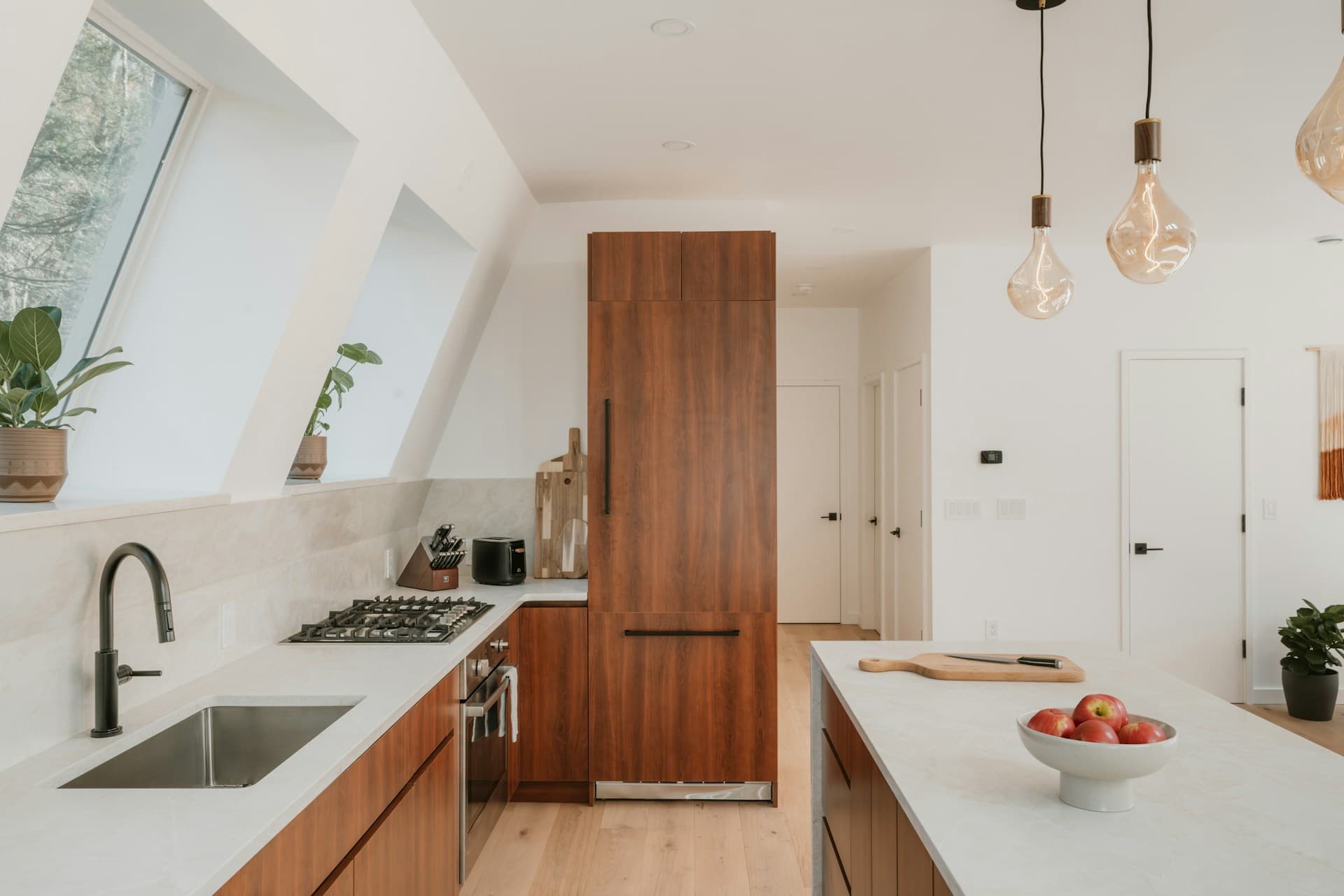
The challenge in transitional design is maintaining warmth while embracing contemporary simplicity. Several strategies help achieve this balance. Incorporate natural wood tones somewhere in the kitchen—perhaps open shelving in natural or stained wood, wood-look flooring, or a wood-topped island creating warmth against stone and painted surfaces. Use varied textures: honed or leathered countertop finishes versus polished, matte cabinet paint versus glossy backsplash tile, woven bar stools against smooth stone island. Layer multiple light sources at different heights creating ambient, task, and accent lighting rather than relying on single overhead fixtures—this layering adds depth and warmth. Include organic elements: fresh greenery, wooden cutting boards, natural fiber textiles in window treatments or seat cushions. These accessories soften the clean lines without adding permanent clutter. In South Florida's indoor-outdoor lifestyle, transitional style extends naturally to outdoor spaces—covered patios with outdoor kitchens featuring the same material and color palettes as interior kitchens create seamless flow appropriate to coastal living. Many Jupiter and Palm Beach oceanfront homes use transitional style to bridge formal interior spaces with casual outdoor entertaining areas. The result is sophisticated but livable, elegant but not precious—spaces that photograph beautifully for resale but function effortlessly for daily family life. This practical elegance explains transitional design's dominance in new construction and renovation throughout Palm Beach County's competitive residential market.
Real Projects and Investment Considerations
We recently completed a transitional kitchen renovation in Wellington: white Shaker cabinets with a navy island, Taj Mahal quartzite countertops throughout, white glass subway tile backsplash, and brushed brass hardware and fixtures. The quartzite investment for 62 square feet with mitered edge island and waterfall side panel represented competitive pricing for premium material and expert fabrication. The total kitchen renovation, including cabinetry, countertops, backsplash, appliances, and installation, was a significant but well-planned investment. The homeowners report the space feels current but not trendy, appropriate for their traditional neighborhood but fresh and updated. A Delray Beach project took a different approach: soft gray perimeter cabinets with white island, honed Calacatta marble on the island, and Colonial White granite on perimeters. The mixed-material countertop investment was more accessible than an all-marble approach. This strategy delivered marble beauty where most visible while controlling costs on perimeter counters. A Boca Raton contemporary project used two-tone gray cabinets (light and charcoal) with book-matched Cristallo quartzite island—the dramatic stone elevated the entire design, with the book-matched island plus perimeter quartzite representing a premium countertop investment. Across all projects, transitional design delivers strong ROI—Palm Beach County buyers overwhelmingly prefer this balanced aesthetic over dated traditional or potentially polarizing ultra-contemporary. Appraisers recognize quality materials like quartzite and marble as value-adds supporting premium pricing. Schedule a design appointment at our Boynton Beach showroom to explore transitional design possibilities, see material samples in context with cabinet door styles and hardware options, and develop a countertop strategy that balances your aesthetic vision with budget realities.