Plan Your Project
Bring this design into your kitchen.
Free 30-minute design consultation at our Boynton Beach showroom. See the slabs, talk through your kitchen, and get a real timeline + ballpark.
★★★★★ 5.0 · 586+ Google reviews · Family-owned since 2008
Understanding Coastal Luxury in Palm Beach County
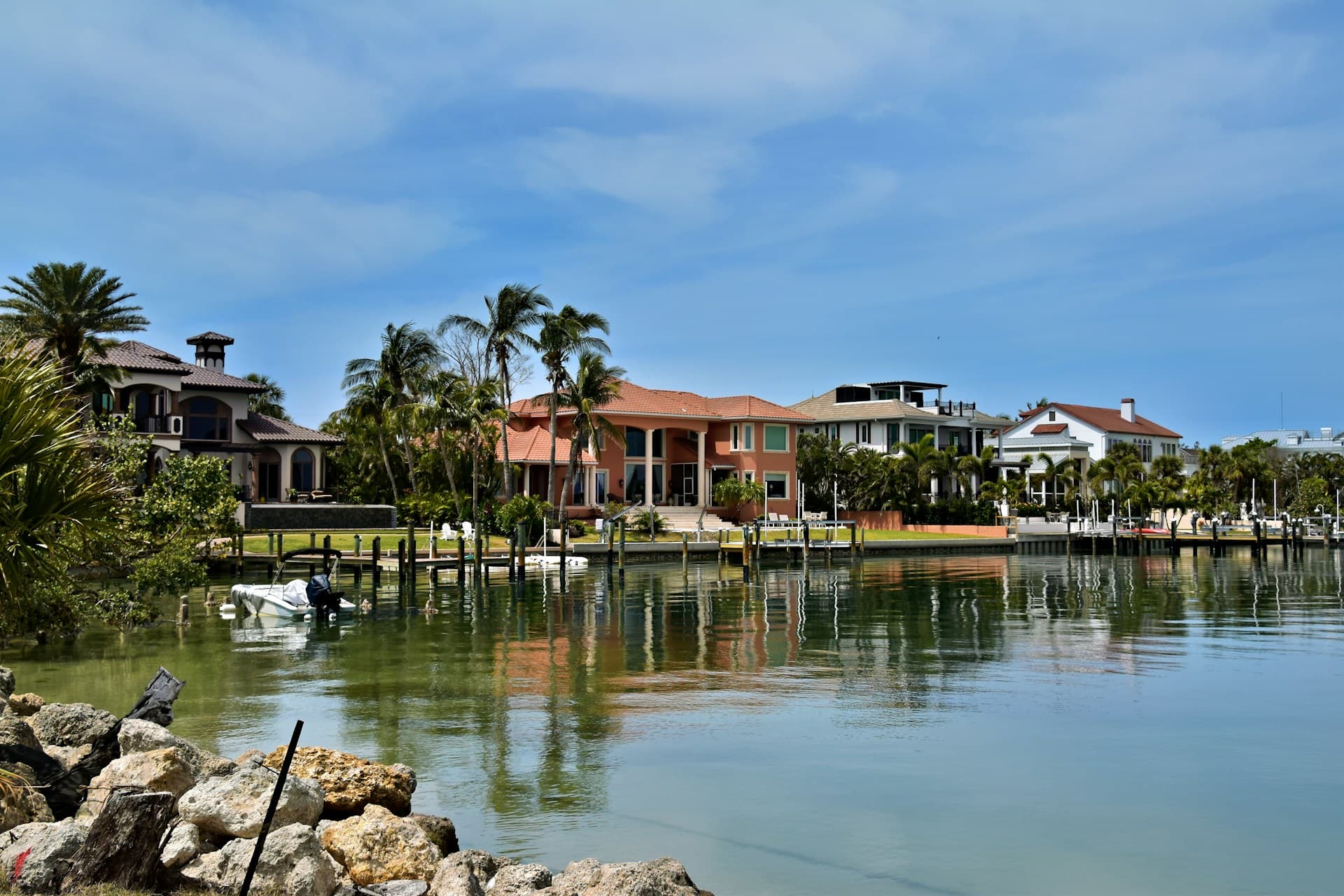
Coastal design in Palm Beach County exists on a spectrum from laid-back beach cottage to full oceanfront opulence, and your countertop choice signals which end you're embracing. The common thread across all successful coastal kitchens is a connection to natural elements, sea, sand, sky, translated through material choices that feel organic rather than industrial. In Jupiter and Tequesta waterfront properties, we see designers gravitating toward stones with movement that echoes water: quartzites with soft gray waves, marbles with delicate veining that suggests sea foam, even granites with crystalline sparkle reminiscent of sun on waves. The color palette tends toward whites, soft grays, warm beiges, and occasional dramatic navy or charcoal accents. What doesn't work? Overly busy granites with multiple competing colors, stark industrial concrete looks, or ultra-modern blacks that feel more Manhattan than Palm Beach. The goal is sophisticated ease: materials beautiful enough for dinner parties but practical enough for daily life in a humid, salt-air environment.
White and Light Stones: The Coastal Foundation
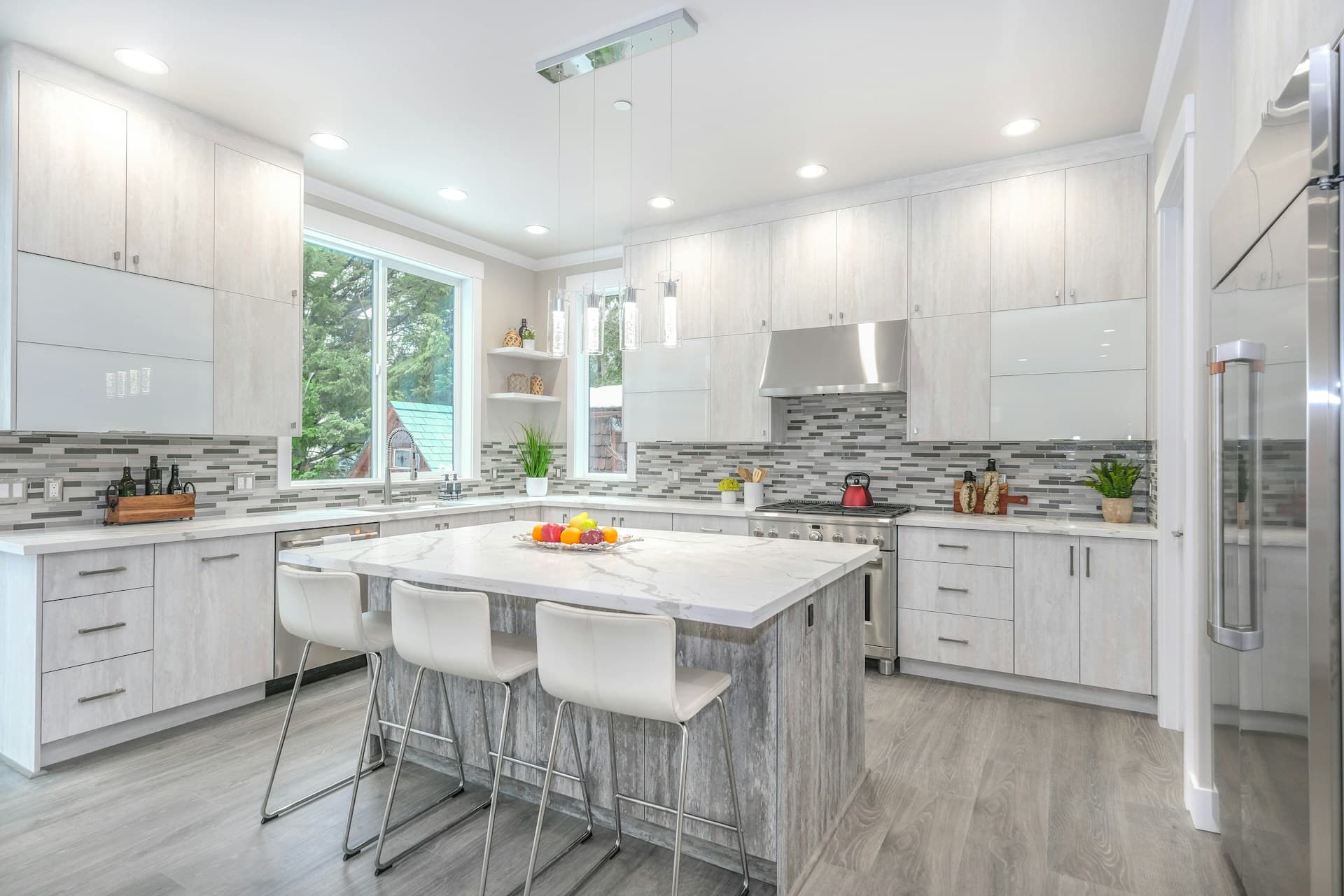
White countertops dominate coastal Palm Beach kitchens, but the type of white matters enormously. Carrara marble delivers classic elegance with its soft gray veining, though it requires owners comfortable with the patina that develops through etching and staining, a look many designers now embrace as authentic coastal character. For those wanting the marble look with less maintenance anxiety, white quartzites like Taj Mahal or Fantasy Brown offer similar aesthetics with superior durability. White quartz options from Caesarstone or Cambria provide the most worry-free approach, with patterns now sophisticated enough to fool most visitors. In Delray Beach oceanfront condos, we've installed countless white Macaubas quartzite islands. The material's slight sparkle catches light beautifully in spaces with water views. The key is pairing these light stones with appropriate cabinetry: soft whites and creams for monochromatic serenity, natural wood tones for warmth, or even bold navy for contrast. Lighting plays a crucial role too. White stones need ample natural light or warm LED fixtures to avoid reading as cold or sterile.
See the Slabs
Want to see what this looks like in your kitchen?
500+ slabs in our Boynton Beach showroom. Browse the live inventory or book a private viewing.
Gray and Blue-Toned Stones: Bringing the Ocean Inside
For homeowners wanting more dramatic coastal character, gray and blue-toned stones create immediate connection to sea and sky. Fantasy Brown quartzite, despite its name, reads predominantly gray with subtle movement and occasional rust-colored deposits that suggest sand. Mont Blanc quartzite offers soft gray tones with gentle white veining that feels like morning fog over the ocean. For bolder statements, Azul Macaubas or Van Gogh quartzite introduce actual blue hues, rare in natural stone and always conversation-starters. These materials work best in kitchens with significant natural light; in darker spaces, they can feel heavy. We typically recommend using blue-toned stones on islands or smaller sections rather than perimeter counters, creating focal points without overwhelming the space. In Palm Beach Gardens homes with neutral coastal palettes, a blue quartzite island surrounded by white quartz perimeters delivers high impact while maintaining the airy feel essential to coastal design. Pair these stones with white or light gray cabinetry and brushed gold or nickel hardware for that effortless Palm Beach sophistication.
Warm Neutrals: The Unexpected Coastal Choice
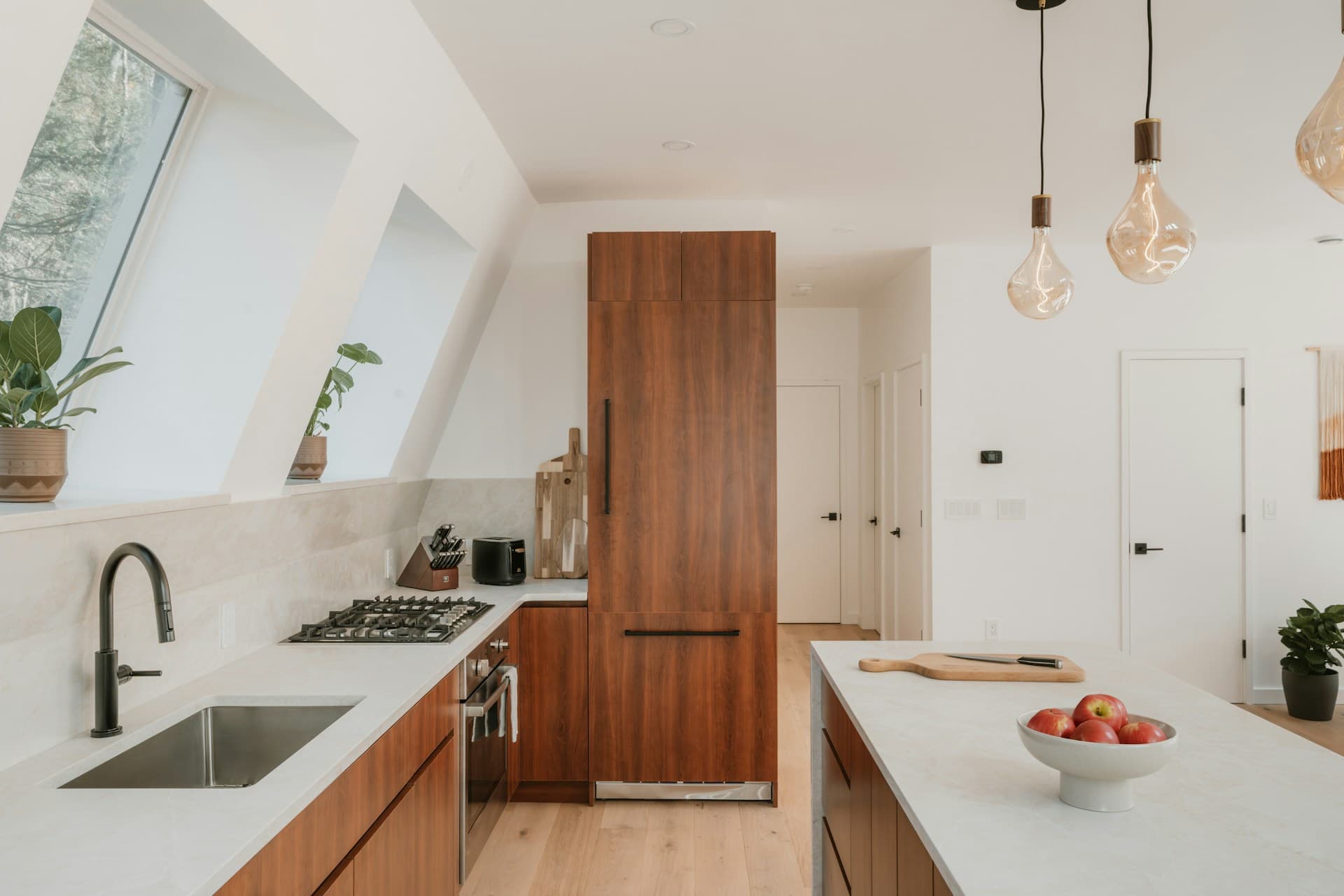
While white and gray dominate coastal conversations, warm-toned stones create equally successful beach-house kitchens with more approachable, lived-in character. Quartzites like Taj Mahal, Cristallo, or Fantasy Brown bring warmth through beige, taupe, and soft gold tones that pair beautifully with natural wood elements, increasingly popular in coastal designs moving away from all-white everything. These stones complement the sandy beaches outside your window rather than contrasting with them. In Wellington and Royal Palm Beach, where views are more suburban than oceanic, warm stone countertops help create coastal ambiance even without direct water access. The warmth also balances the cool blues and greens typical in coastal color schemes, preventing spaces from feeling washed out. We often see these materials paired with white shaker cabinetry and open shelving displaying natural materials like rattan, wood, and ceramic. The key is keeping veining subtle and movement soft. Busy patterns or high-contrast veining disrupts the calm, collected vibe coastal design requires.
Practical Considerations for Coastal Environments
Palm Beach County's coastal environment introduces practical considerations beyond aesthetics. Salt air, high humidity, and the sandy grit that inevitably enters beach houses all affect countertop performance. Marble, while beautiful, etches when acidic foods contact the surface, problematic in kitchens where limes and lemons fuel countless coastal cocktails. If you choose marble anyway, embrace the developing patina or commit to immediate cleanup after every use. Quartzite offers superior durability with comparable beauty, though it occasionally requires resealing. Quartz provides the most carefree option, resisting stains and etching, though extreme heat from pots or outdoor grilling activities can cause discoloration in some brands. Granite, often overlooked in coastal design conversations, actually performs excellently in humid environments and offers more pattern variety than quartz. For homes with direct ocean exposure in Highland Beach or Gulf Stream, we recommend avoiding porous stones like limestone or travertine, which can absorb salt air and moisture, leading to staining and structural issues. Whatever material you choose, specify matte or leathered finishes rather than high polish. They hide water spots and fingerprints better in high-humidity environments.
Bringing It All Together: Complete Coastal Kitchen Materials
Successful coastal countertop design rarely exists in isolation. It's part of a holistic material story. We typically recommend coordinating your countertop stone with backsplash decisions early in the design process. Full-height marble or quartzite backsplashes create seamless luxury but require significant slab material. Glass tile in soft blues, greens, or whites offers budget-friendly coastal character while protecting walls in cooking zones. Subway tile remains timelessly appropriate, especially in oversized formats with minimal grout lines. For flooring, light wood tones or wood-look tile complement almost any stone countertop choice while maintaining coastal ease. Hardware finishes matter too. Brushed nickel, champagne bronze, or even matte black work with coastal stone selections, while shiny chrome feels dated. In our Boynton Beach showroom, we maintain material boards showing proven coastal combinations: white quartzite counters with navy cabinets and gold hardware; Fantasy Brown islands with white perimeters and open shelving; Carrara marble with light wood cabinets and glass pendants. Ready to create your perfect coastal kitchen? Book a showroom viewing to see our full selection of coastal-appropriate materials and discuss your specific vision.