Plan Your Project
Bring this design into your kitchen.
Free 30-minute design consultation at our Boynton Beach showroom. See the slabs, talk through your kitchen, and get a real timeline + ballpark.
★★★★★ 5.0 · 586+ Google reviews · Family-owned since 2008
What Are Waterfall Edges and Why They've Become Ubiquitous
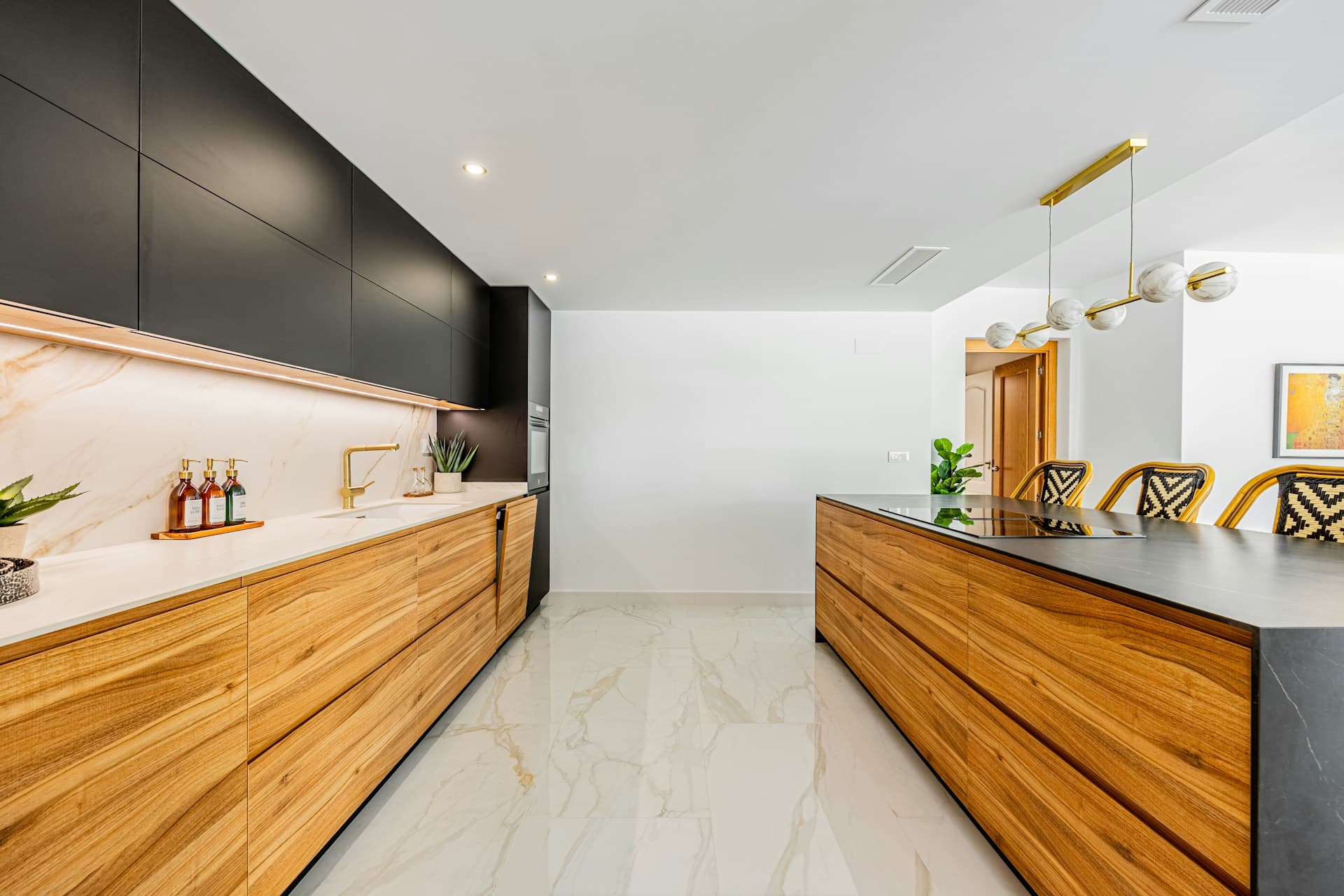
Waterfall edges extend countertop material vertically down the sides of cabinets or islands, creating a continuous flow from horizontal surface to floor. The name comes from the visual effect: veining or patterns 'cascade' down the sides like water over a cliff. Originally a luxury feature in high-end kitchens, waterfall edges have become mainstream in 2026, appearing in 40% of our Palm Beach County installations. The popularity stems from dramatic visual impact, contemporary aesthetics that complement modern cabinetry, protection for cabinet sides from kicks and bumps, and Instagram-worthy appeal that clients see in design magazines and social media. We've fabricated over 2,000 waterfall edges since 2008 in Boca Raton, Delray Beach, Wellington, Jupiter, and West Palm Beach. Standard installations carry a meaningful per-side upcharge, with book-matched exotic materials costing considerably more. For a kitchen island with two waterfall sides, the additional investment beyond standard countertop pricing is significant but transformative. Is that investment justified? It depends on your kitchen's design, budget priorities, and long-term plans. Let's break down the considerations.
Cost Breakdown: Why Waterfall Edges Are Expensive
Waterfall edges require 3-4x more material than standard overhangs because you're covering 36-inch vertical cabinet sides rather than 1.5-inch overhangs. A standard island top might use 15 square feet of stone; adding waterfall edges increases material usage to 25-30 square feet. Fabrication complexity adds labor costs: waterfall pieces must be mitered at precise 45-degree angles where horizontal and vertical sections meet, creating seamless joints. These miters are structurally critical and require experienced fabricators. We reinforce waterfall miters with steel supports and two-part epoxy, ensuring they'll withstand decades of use. Book-matching dramatically increases costs because you need consecutive slabs with matching veining. For dramatic quartzites like Cristallo or exotic granites, book-matching ensures veining flows continuously from counter surface down the side. This requires purchasing multiple slabs from the same bundle, increasing material costs by 30-40%. Installation is more complex: waterfall pieces are heavy (150-300 pounds) and require careful handling and support during curing. Pricing scales with material and complexity: standard waterfall edges in granite or simple quartzite are the most accessible, premium waterfall edges in dramatic quartzite or exotic granite cost moderately more, and book-matched exotic waterfall edges command the highest premium. For typical islands with waterfall edges on both ends, the addition represents a meaningful upgrade investment.
See the Slabs
Want to see what this looks like in your kitchen?
500+ slabs in our Boynton Beach showroom. Browse the live inventory or book a private viewing.
Design Impact: When Waterfall Edges Enhance Your Kitchen
Waterfall edges work best in contemporary and transitional kitchens with clean-lined, handleless cabinetry and minimal ornamentation. The vertical stone becomes a focal point and architectural feature. They're particularly effective with dramatic materials: white quartzites with bold veining (Taj Mahal, Cristallo), exotic granites with movement (Fusion, Van Gogh), book-matched slabs where veining flows from top to sides. In our Jupiter and West Palm Beach installations, waterfall edges on islands create stunning room dividers in open-concept layouts. One Boca Raton client's book-matched Cristallo quartzite island with waterfall edges on both ends became the home's signature feature, visible from living room, dining room, and entry. The investment in that island exceeded their entire perimeter counter cost, but it justified itself as sculpture. Waterfall edges work less well in traditional kitchens with ornate cabinetry, raised-panel doors, and decorative moldings. The contemporary aesthetic clashes with classic design elements. They're also questionable on busy, multi-colored stones where visual continuity from top to sides creates overwhelming pattern rather than elegant flow. If your granite or quartzite has chaotic veining, waterfall edges amplify rather than enhance.
Structural Considerations and Long-Term Durability
Waterfall edges are structurally sound when properly fabricated and installed. The mitered joint where horizontal and vertical pieces meet is reinforced with steel brackets and epoxy, creating a connection stronger than the surrounding stone. We've never had a properly installed waterfall edge fail in 2,000+ installations. However, vertical sections are vulnerable to impact damage. Kick the bottom corner with hard-soled shoes, hit it with vacuum cleaners, or bump it with furniture, and you risk chipping. Corners are the most vulnerable; we slightly radius (round) waterfall edges at floor level to reduce chip risk. For homes with young kids, active pets, or heavy use, consider this vulnerability. Countertop-height edges rarely get damaged, but floor-level edges see abuse. Repair is possible: we've fixed 15-20 waterfall edge chips over 10 years using color-matched epoxy, at a reasonable repair cost. Granite and quartzite chips blend into the natural stone pattern; quartz chips are more visible due to uniform coloring. One Wellington client with three boys under age 10 chipped their waterfall edge twice in four years from bike handlebars and hockey sticks. They don't regret the waterfall edge but acknowledge it requires vigilance in high-traffic households.
Alternatives to Full Waterfall Edges: Partial and Decorative Options
If waterfall edges appeal but costs or practicality are concerns, consider these alternatives: Partial waterfall edges: Extend countertop material 6-12 inches down the side rather than full height to floor. This creates visual interest at a fraction of the cost while avoiding floor-level vulnerability. Works well in transitional kitchens. Waterfall edge on one side only: For islands positioned against walls or where only one end is visible, single waterfall edges reduce costs by 50% while maintaining impact. Most effective when the waterfall side faces the main sight line (kitchen entry or living room). Contrasting materials: Use wood, metal, or different stone for vertical sides rather than matching countertop material. This creates architectural interest without book-matching costs. We've installed islands with quartzite tops and walnut waterfall sides; the material contrast is striking. Mitered edge with no extension: Create the visual effect of a thicker countertop by mitering stone strips to the underside edge, doubling the apparent thickness from 3cm to 6cm. This carries a modest per-linear-foot charge and creates substantial presence without vertical extension. In Delray Beach and Palm Beach Gardens, we're seeing 25% of clients choose these alternatives over full waterfall edges, achieving 70% of the visual impact at 40-50% of the cost.
Resale Value: Do Waterfall Edges Pay Off at Sale Time?
Waterfall edges photograph beautifully for real estate listings, creating luxury impressions that drive showings. Realtors we work with in Boca Raton report that waterfall edge islands are memorable features buyers mention during offer negotiations. However, quantifying exact value-add is difficult: appraisers don't add separate line items for waterfall edges; they're considered part of overall finish quality. Homes with high-end kitchens (including waterfall features) command premiums, but it's impossible to isolate waterfall contribution. In luxury homes, waterfall edges are expected features in high-end kitchens. Their absence might hurt value more than their presence adds value. In the mid-range market, waterfall edges differentiate your listing from competition, potentially reducing time-on-market. For primary residences where you'll live 10+ years, ROI calculations are secondary to daily enjoyment. If you love the look and it fits your budget, waterfall edges are worthwhile regardless of resale impact. For pre-sale renovations and flip projects, waterfall edges make sense in higher-value homes where luxury features are expected. Below that price point, standard countertops with premium materials deliver better ROI than waterfall edges with builder-grade materials. Spend your budget on material quality first, waterfall edges second.
See Waterfall Edge Examples in Our Showroom
Visit our Boynton Beach showroom to see waterfall edge displays and discuss whether they're right for your kitchen. We'll show you book-matching options, explain structural considerations, and provide transparent pricing based on your selected material and island dimensions. Use our online estimator at /estimator to get baseline countertop pricing, then add waterfall costs during your showroom appointment. We offer digital renderings showing how your selected slab will look with waterfall edges, helping you visualize the final result before committing. Schedule your visit at /book-viewing. With over 2,000 waterfall edge installations across Palm Beach County, we've refined fabrication and installation to deliver flawless results that last decades. We'll help you decide if waterfall edges are worth the investment for your specific kitchen and budget.