Plan Your Project
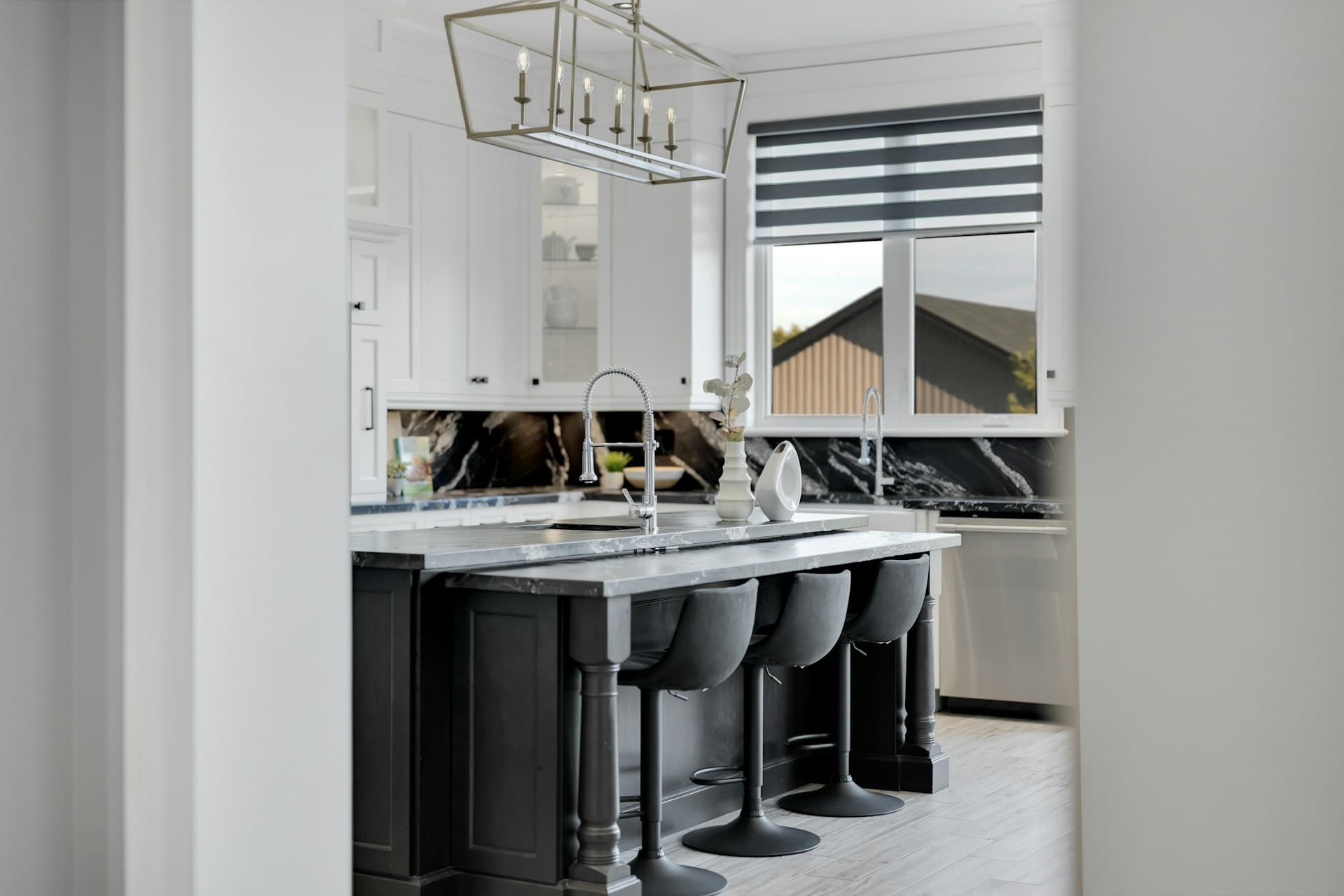
Bring this design into your kitchen.
Free 30-minute design consultation at our Boynton Beach showroom. See the slabs, talk through your kitchen, and get a real timeline + ballpark.
★★★★★ 5.0 · 586+ Google reviews · Family-owned since 2008
The Honed Revolution: Why Matte Finishes Overtook Glossy
Five years ago, nearly all of our installations were polished stone. In 2026, that's shifting fast: an increasing number of our Palm Beach County clients — roughly 15-20%, up from 5-10% a few years ago — now choose honed finishes for kitchen countertops, and the trend is accelerating. This shift reflects both aesthetic trends toward warmer, less reflective surfaces and practical considerations about maintenance and livability. Polished finishes are created by grinding stone with progressively finer abrasives (up to 3,000+ grit) until the surface reflects light like glass. Honed finishes stop at 400-800 grit, creating a smooth, matte surface with minimal light reflection. The visual difference is dramatic: polished stone emphasizes color depth and veining with high gloss, while honed stone offers subtle, sophisticated elegance with tactile softness. In our Boynton Beach showroom, we stock slabs in both finishes, and clients consistently report that honed samples feel warmer and more inviting. Beyond aesthetics, honed finishes hide scratches, water spots, and fingerprints better than polished surfaces. They also conceal etching on marble and softer stones, making maintenance less stressful. Let's break down the practical implications for your kitchen.
Visual Impact and Design Trends: Why Luxury Designers Prefer Honed
Polished stone dominated the 1990s-2010s because it showcased stone's depth and crystalline structure, creating jewelry-like countertops that photographed dramatically. Honed finishes were considered less prestigious or 'unfinished.' That perception has reversed completely. In 2026, polished counters read as dated in high-end kitchens, while honed surfaces signal refined taste and contemporary sensibility. The shift aligns with broader design trends away from shiny, reflective surfaces (glossy cabinets, polished chrome fixtures) toward matte, textured materials (flat-panel cabinetry, brushed metals, lime-washed woods). Honed stone complements these finishes far better than polished stone. In Boca Raton and Delray Beach luxury homes, interior designers specify honed countertops in 80%+ of projects. The matte finish allows cabinetry, lighting, and architectural details to take center stage rather than competing with reflective counters. One Jupiter estate we worked on features honed Taj Mahal quartzite throughout the kitchen; the stone's subtle gray veining provides visual interest without overwhelming the custom white oak cabinetry and brass hardware. Had they used polished quartzite, the counters would have dominated rather than supported the overall design.
See the Slabs
Want to see what this looks like in your kitchen?
500+ slabs in our Boynton Beach showroom. Browse the live inventory or book a private viewing.
Maintenance Reality: Why Honed Finishes Are More Forgiving
Polished stone shows every water spot, fingerprint, and minor scratch. The high-gloss surface reveals imperfections that are invisible on honed finishes. We receive weekly calls from clients with polished black granite or dark quartz asking how to eliminate water spots (answer: you can't eliminate them entirely; you manage them with constant wiping and polishing). Honed finishes hide these marks because they don't reflect light uniformly. On marble specifically, honed finishes are game-changers. Polished marble etches from acidic substances (lemon, wine, tomato sauce), creating dull spots that destroy the gloss. On honed marble, etching is far less visible because the entire surface is already matte. We recommend honed marble for any kitchen application; polished marble should be reserved for bathrooms and low-use areas. Sealing requirements are identical for both finishes on most stones. However, very fine-grained honed surfaces may need slightly more frequent sealing because the microscopic surface texture provides marginally more surface area for absorption. In practical terms, this means sealing every 12-18 months instead of every 18-24 months, a negligible difference.
Durability and Scratch Resistance: The Surprising Truth
Conventional wisdom holds that polished finishes are more durable because the surface is fully sealed by ultra-fine grinding. This is partially true but misleading. Polished finishes show scratches more obviously because any disruption to the mirror-like surface catches light differently. Honed finishes can have identical scratch resistance but hide superficial scratches within the matte texture. For hardness, the finish doesn't change the underlying stone's Mohs rating: honed granite is just as hard as polished granite. The difference is visual: a knife scratch across polished granite creates a visible line, while the same scratch on honed granite blends into the texture. We've documented this with microscope analysis; the actual scratch depth is identical, but visibility differs dramatically. One West Palm Beach client switched from polished Absolute Black granite to honed after three years of obsessing over minor scratches that were only visible in direct lighting. The honed replacement has identical actual wear but looks pristine because imperfections disappear into the matte surface. For busy kitchens with kids, honed finishes reduce stress and maintenance anxiety.
Cost Implications: Honed vs Polished Pricing
Polished finishes cost slightly more per square foot than honed in fabrication because creating a mirror-finish requires additional grinding steps and polishing compounds. However, most fabricators don't pass this cost to clients; we include standard polished or honed finish in base pricing. Custom finishes like leathered (textured), brushed, or river-washed add a notable per-square-foot premium due to specialized equipment and labor. Refinishing existing counters: converting polished to honed carries a moderate per-square-foot cost and requires professional equipment. We've performed 50+ refinishing projects for clients who wanted to modernize polished granite or marble installed in the 2000s-2010s. The transformation is dramatic, giving old stone a contemporary look without replacement costs. Converting honed to polished is more difficult and expensive (a higher per-square-foot investment) because it requires removing more material to achieve mirror-finish. For new installations, specify your preferred finish upfront at no cost difference. For existing counters you want to update, honing is the cost-effective refinishing option that also improves maintenance characteristics.
Best Materials for Each Finish: What Works and What Doesn't
Granite: Excellent in both polished and honed. Dark granites (Absolute Black, Steel Gray) look sophisticated honed. Light granites (Colonial Cream, Kashmir White) work well in both finishes. Marble: Strongly recommend honed for kitchens to hide etching. Polished marble is beautiful but high-maintenance; reserve it for bathrooms. Quartzite: Stunning in both finishes. Polished quartzite emphasizes crystalline depth and veining drama. Honed quartzite offers soft, sophisticated elegance. Choose based on aesthetic preference and kitchen style. Quartz (engineered): Available in both finishes, though polished is more common. Honed quartz shows fingerprints less and has become popular for contemporary kitchens. Soapstone: Naturally soft, soapstone is typically honed. Some fabricators offer polished soapstone, but it requires frequent re-oiling to maintain. Porcelain: Available in both finishes. Honed porcelain is excellent for outdoor kitchens and high-use areas because it hides water spots. In our Wellington and Palm Beach Gardens installations, we're seeing 70% honed quartzite, 60% honed granite, 90% honed marble, and 40% honed quartz. The trend toward matte finishes spans all materials.
Compare Finishes in Person at Our Showroom
See identical slabs in both polished and honed finishes at our Boynton Beach showroom. We'll show you maintenance demonstrations, discuss how each finish performs in daily use, and help you select the option that matches your lifestyle and design aesthetic. We can also show you 'before and after' samples from refinishing projects. Use our online estimator at /estimator to get pricing for your kitchen, then book a viewing at /book-viewing to see materials in person. Both finishes are included in standard pricing with no upcharge. With over 10,000 kitchens installed across Palm Beach County, we've seen how finish choice impacts long-term satisfaction. We'll help you make the right decision for your home and cooking habits.