Free Showroom Visit
See this material in person at our Boynton Beach showroom.
500+ slabs in stock. We'll walk you through the differences and help you find the right one for your kitchen. No pressure, no sales pitch.
★★★★★ 5.0 · 586+ Google reviews · Family-owned since 2008
What Sintered Stone Is and Why It's Revolutionary
Sintered stone represents the cutting edge of engineered surface technology, created through a manufacturing process that mimics metamorphic rock formation occurring over millennia in nature. Raw materials including porcelain, glass, and quartz are subjected to extreme pressure (25,000+ tons) and heat (1200°C+) in a process called sinterization, which fuses particles at the molecular level without melting them. This creates an ultra-compact, non-porous surface with performance characteristics exceeding any natural stone or traditional engineered material. Leading brands Dekton (by Cosentino) and Neolith (by TheSize) pioneered this technology for residential applications, offering surfaces that resist heat to 1000°F, scratch from any kitchen knife, staining from any household substance, and UV fading even in direct Florida sunlight. Unlike quartz, sintered stone contains no resins that can discolor or melt, making it suitable for both indoor and outdoor applications. In Palm Beach County's luxury market, sintered stone has rapidly gained adoption, particularly among design-forward homeowners seeking materials that look natural but perform beyond natural stone's limitations. The technology essentially eliminates traditional countertop maintenance while offering design flexibility impossible with natural materials.
Dekton vs. Neolith: Comparing the Market Leaders
While both Dekton and Neolith use sinterization technology, each brand offers distinct characteristics and advantages. Dekton, manufactured by Cosentino (makers of Silestone quartz), offers the broadest color range with 60+ options including realistic marble and granite looks, contemporary concrete finishes, and bold solid colors. Dekton's marketing emphasizes extreme durability and indoor-outdoor continuity, positioning it as the ultimate performance surface. Neolith, produced by Spanish manufacturer TheSize, focuses on larger format slabs (up to 10.5' x 5.25') and ultra-thin options (6mm and 12mm thick) that enable innovative applications like cabinetry cladding and furniture. Neolith's aesthetic skews toward more natural, nuanced looks with sophisticated veining. Performance-wise, both resist heat, scratches, and stains equally well; differences lie primarily in aesthetics and installation considerations. Dekton tends to have slightly greater mass appeal in Palm Beach County due to Cosentino's established distribution network and Cambria-style marketing, while Neolith attracts design purists seeking the largest format options and most natural aesthetics. At our showroom, we stock both brands, allowing side-by-side comparison. Many clients choose based on specific color preferences rather than brand loyalty.
See the Slabs
Want to see what this looks like in your kitchen?
500+ slabs in our Boynton Beach showroom. Browse the live inventory or book a private viewing.
Design Applications Beyond Traditional Countertops
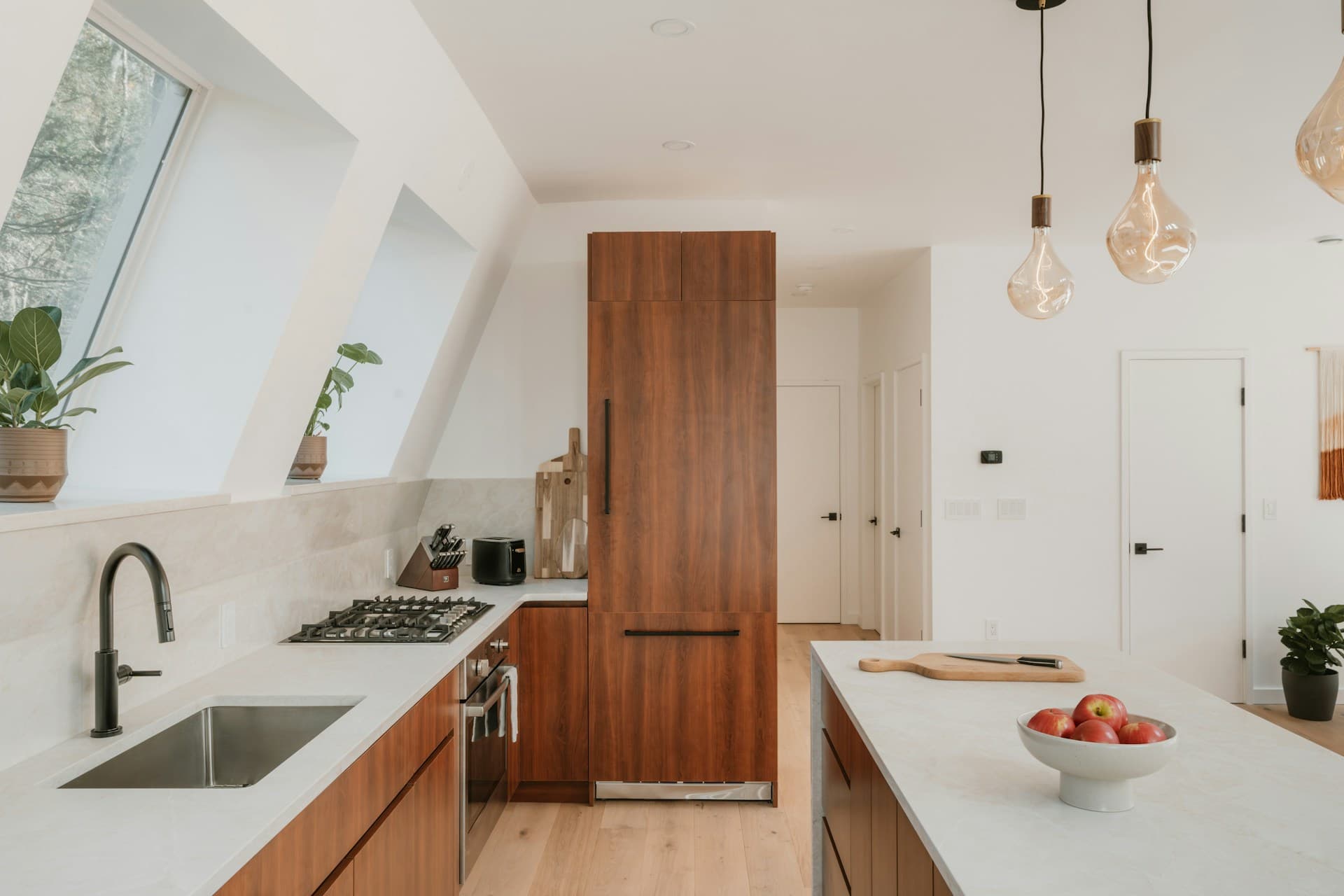
Sintered stone's technical properties enable applications impossible with natural stone or quartz, expanding design possibilities throughout kitchens and homes. Ultra-thin formats (6-12mm) can clad entire cabinetry runs, creating seamless floor-to-ceiling installations where the same material flows from countertops down waterfall edges and continues across cabinet faces. This creates dramatic visual continuity that makes kitchens feel like cohesive sculptures rather than assembled components. Large formats (10+ foot slabs) enable seamless installations with fewer or no seams, particularly valuable for dramatic islands. Sintered stone's UV resistance makes it ideal for outdoor kitchens, where even granite can fade over time in Florida's intense sun. We're installing Dekton and Neolith in covered terraces, pool decks, and even vertical exterior cladding where natural stone would deteriorate. The material's heat resistance allows innovative applications like integrated trivets or heat-proof zones where hot cookware sits directly on the surface. Some Boca Raton contemporary homes are using sintered stone for entire feature walls, fireplace surrounds, and even custom furniture pieces. The design flexibility transforms these materials from simple countertop alternatives into comprehensive architectural systems.
Performance Advantages in Florida's Climate
South Florida's unique environmental conditions make sintered stone particularly advantageous compared to traditional materials. The combination of high humidity, salt air, intense UV exposure, and year-round heat challenges all countertop materials, but sintered stone's engineered composition addresses each factor specifically. Zero porosity means moisture can't penetrate the surface, eliminating concerns about bacterial growth, mold, or water damage common with poorly sealed natural stone. UV stability ensures colors won't fade even on sunny outdoor counters, a significant advantage over natural marble or limestone that can discolor. Heat resistance means no concerns about hot pans near outdoor grills or in sun-exposed indoor spaces where temperatures can spike. The material's density also provides superior impact resistance compared to natural stone; dropped pots or heavy objects that would chip granite bounce off sintered stone. Salt air that corrodes metal fixtures and degrades sealers on natural stone has no effect on sintered stone's non-reactive surface. For coastal Palm Beach County properties, these performance attributes translate to decades of maintenance-free beauty. The material simply doesn't require the sealing, polishing, and careful maintenance that natural stone demands in our challenging climate.
Cost Analysis and Value Proposition
Sintered stone pricing positions it in the premium category, comparable to high-end quartzite and luxury marble on a per-square-foot basis in Palm Beach County. A typical kitchen installation represents a 30-60% premium over standard quartz but delivers performance advantages that justify the investment. The value proposition becomes clearer when considering total cost of ownership: sintered stone requires zero maintenance (no sealing, no polishing, no special cleaners), eliminating the recurring annual maintenance costs associated with natural stone. Over a 20-year ownership period, these savings substantially narrow the price gap with cheaper alternatives. The material's extreme durability also means no repairs, refinishing, or replacement costs that natural stone may incur from etching, staining, or damage. For outdoor applications, sintered stone may actually cost less than marine-grade materials engineered to withstand Florida's coastal environment. From ROI perspective, sintered stone delivers strong returns in Palm Beach County's luxury market; buyers shopping higher-end homes view advanced materials as expected features rather than upgrades. The combination of zero maintenance, unlimited warranty coverage, and contemporary aesthetics appeals to buyers seeking modern, low-maintenance luxury.
Installation Considerations and Fabricator Expertise
Despite its extreme durability once installed, sintered stone's ultra-compact density makes it more brittle during fabrication and installation than natural stone or quartz, requiring specialized equipment and expertise. Not all fabricators have the tools and training to work with Dekton or Neolith properly; improper handling can cause fractures or edge chips that compromise the installation. Diamond blades designed specifically for sintered stone are required; standard granite blades dull rapidly and create rough cuts. Cutting produces more dust than natural stone, requiring enhanced dust collection systems. Transport and handling demand more care since the slabs can fracture if improperly supported; installers need specialized carts and lifting systems. Edge profiles are limited compared to natural stone; sintered stone works best with clean, modern edges rather than ornate profiles that increase fracture risk. However, fabricators with proper equipment and training find sintered stone actually easier to work with than quartzite, producing cleaner cuts and more precise installations. At our facility, we invested in specialized tooling and sent our team for manufacturer training specifically to handle sintered stone projects. This ensures we can confidently offer these materials with quality guarantees. Verify your fabricator's sintered stone experience before committing; improper fabrication voids manufacturer warranties.
Experience Sintered Stone at Our Showroom
Sintered stone's unique characteristics and performance benefits are best understood through hands-on experience. Visit our Boynton Beach showroom to see and touch full slabs of Dekton and Neolith, comparing them directly to natural stone and quartz alternatives. Our team conducts live demonstrations of the material's heat resistance, scratch resistance, and stain resistance that make believers of skeptics. We maintain 40+ sintered stone options in inventory, representing the full range from natural marble looks to contemporary concrete finishes. Our design consultants will help you understand which applications make sense for your project and which traditional materials might serve better in specific contexts. We provide detailed quotes comparing sintered stone costs to natural alternatives, helping you make informed decisions based on your budget and priorities. Whether you're renovating a full kitchen, upgrading an outdoor entertaining space, or exploring cutting-edge materials for new construction, we'll guide you through the selection process. Schedule your visit at countertopspalmbeach.com/book-viewing or use our online estimator for instant pricing. Discover why sintered stone is rapidly becoming the luxury standard in South Florida.