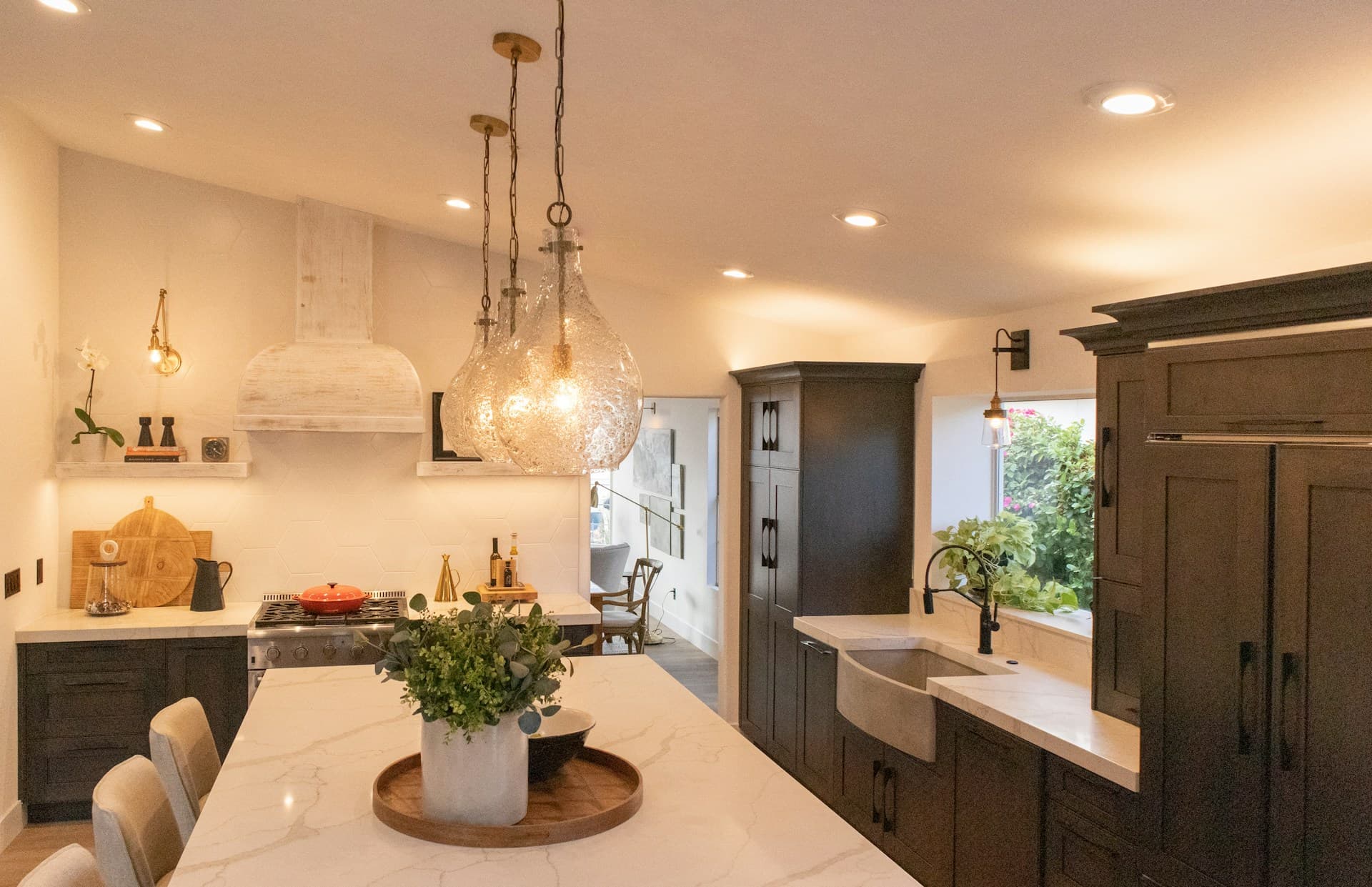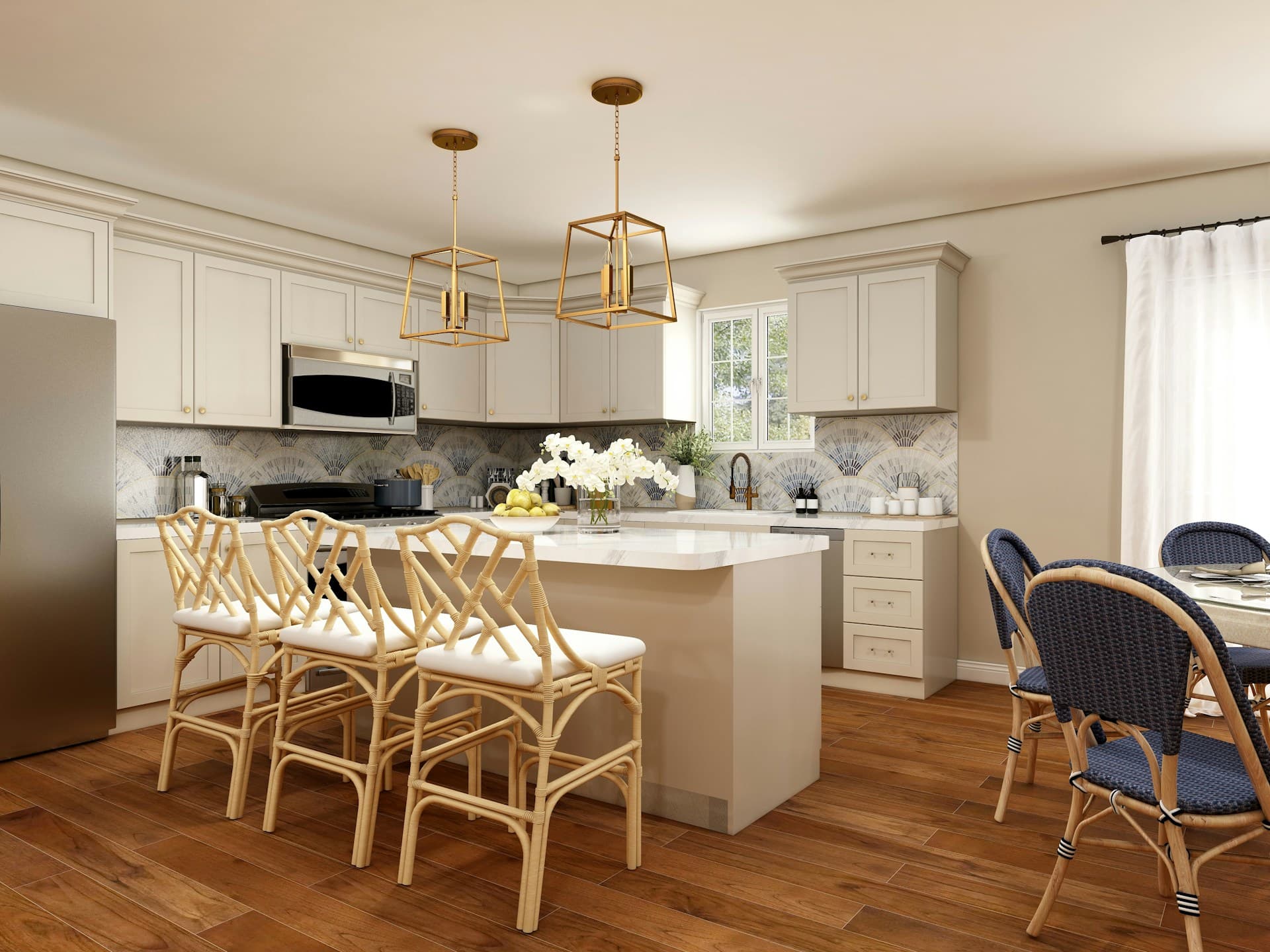
Side-by-Side at the Showroom
See both materials in person before you decide.
Touch the slabs, see the veining in natural light, and get an honest fabricator's opinion. Free 30-minute showroom consultation.
★★★★★ 5.0 · 586+ Google reviews · Family-owned since 2008
The Florida Factor: Why Climate Matters for Countertop Selection
South Florida's subtropical climate creates unique challenges for countertop materials. We experience 90°F+ temperatures six months annually, 70-80% humidity year-round, salt air in coastal areas, and intense UV exposure through large windows common in modern Florida homes. After installing over 10,000 countertops across Palm Beach County since 2008, we've documented how materials perform in these conditions. Granite, being 100% natural stone formed under extreme heat and pressure, handles Florida's climate flawlessly. Quartz, containing 6-10% polymer resins, faces UV degradation near windows and can suffer delamination in extreme heat if improperly installed. That said, both materials dominate South Florida kitchens, collectively representing 70% of our installations. This guide breaks down performance in real-world Florida conditions, not laboratory testing or generic national comparisons. We'll cover cost, durability, heat resistance, UV stability, maintenance, and resale value specific to Boca Raton, Delray Beach, Wellington, Jupiter, and West Palm Beach markets.
Cost Comparison: Installation Prices in Palm Beach County
Granite spans a wide price range installed, depending on rarity and complexity. Builder-grade options (Uba Tuba, Santa Cecilia, Black Galaxy) are the most budget-friendly. Mid-tier granites (Kashmir White, Blue Pearl, Colonial Cream) sit at moderate price points. Exotic granites (Van Gogh, Fusion, Blue Bahia) command premium pricing due to limited availability. Quartz pricing spans a similarly broad range. Entry-level quartz (basic Viatera, LG Hausys colors) is competitively priced. Mid-tier brands (Caesarstone, Silestone, Cambria standards) are positioned in the middle. Premium collections (Caesarstone Concetto, Dekton, Neolith) reach the higher end. For a typical 40-square-foot Palm Beach County kitchen with an island, one sink cutout, and standard edges, granite generally comes in lower than quartz. The cost gap has narrowed since 2020; quartz used to command a 40% premium, now it's only 15-25% more. Both materials offer excellent long-term value, with properly installed surfaces lasting 25+ years. Our fabrication and installation work is covered by a written 12-month workmanship warranty.
See the Slabs
Want to see what this looks like in your kitchen?
500+ slabs in our Boynton Beach showroom. Browse the live inventory or book a private viewing.
Heat Resistance: Critical for Florida's Outdoor Kitchen Culture
Granite is heat-proof to 1,200°F, formed under extreme temperature and pressure. You can place hot pots, pans, and baking sheets directly on granite without damage. We've never seen heat-related cracking or scorching on granite in 10,000+ installations. Quartz is heat-resistant but not heat-proof. The polymer resin binder can scorch, discolor, or crack from sustained contact with heat above 300°F. Most manufacturers require trivets for hot pots. In South Florida's intense summer heat, quartz near sun-exposed windows can reach 120-150°F surface temperatures. We've documented three cases of quartz cracking near floor-to-ceiling west-facing windows in West Palm Beach high-rises, where afternoon sun and interior heat created localized thermal stress. For outdoor kitchens, granite is mandatory; quartz manufacturers void warranties for exterior installations due to UV and temperature extremes. One Jupiter client with an outdoor kitchen uses Black Galaxy granite exposed to full sun, rain, and salt air for eight years without degradation. Quartz would have delaminated within 18 months in those conditions.
Stain Resistance and Maintenance: Daily Performance Reality
Quartz wins on stain resistance due to its non-porous engineered composition. Properly manufactured quartz never needs sealing and resists staining from wine, oil, coffee, and most household substances. However, certain chemicals (paint remover, oven cleaner, permanent markers) can penetrate the resin binder and cause irreversible staining. We've also seen UV yellowing on white quartz near windows, though modern formulations have improved. Granite requires sealing every 1-2 years (15 minutes of work with an inexpensive sealer). Properly sealed granite resists staining well, though lighter granites can show oil absorption if sealer has degraded. Dark granites (Absolute Black, Steel Gray) are nearly non-porous and need minimal sealing. Daily cleaning is identical for both materials: pH-neutral soap and water. Avoid bleach on granite (degrades sealer) and avoid abrasive cleaners on quartz (dulls the polish). In Palm Beach Gardens rental properties, we recommend quartz for tenant kitchens due to zero-maintenance requirements. For primary residences where owners perform basic maintenance, granite's sealing requirement is negligible.
Aesthetic Options: Natural Character vs. Engineered Consistency
Granite offers unlimited natural variation. Even slabs from the same quarry show unique patterning, mineral deposits, and movement. This creates one-of-a-kind kitchens where no two installations match. Granite's depth comes from natural crystal structure that reflects light uniquely at different angles. For clients who value authentic natural materials, granite's geological story resonates. Quartz offers engineered consistency. If you select a specific color, multiple slabs will match closely, making it ideal for large installations requiring slab continuity. Modern quartz can convincingly mimic Carrara marble, concrete, or solid colors impossible in nature. However, quartz lacks the depth and light-play of natural stone; under scrutiny, the difference is apparent. In Boca Raton and Delray Beach high-end homes, we're seeing 60/40 preference for granite over quartz, driven by desire for authentic natural materials. In Wellington family homes and investment properties, quartz's consistency and low maintenance win out. Both materials photograph well, though granite's natural depth creates more visual interest in professional real estate photography.
Durability and Chip Resistance: Long-Term Performance
Granite rates 6-6.5 on Mohs hardness scale, making it scratch-resistant to knives and daily use. It's virtually impossible to scratch granite during normal cooking. However, granite can chip at edges or corners from impact (dropping a cast-iron pan on the edge). Chips are repairable with color-matched epoxy by experienced fabricators; we've repaired 50+ granite chips over 10 years, typically a modest repair cost. Quartz rates 7 on Mohs scale due to its high quartz crystal content, making it marginally harder than granite. It's equally scratch-resistant but more brittle. Quartz can chip from impact, and repairs are more visible due to the uniform coloring (natural granite's variation hides repairs better). Both materials can crack from improper installation, particularly around cutouts. We use advanced digital templating to identify stress points and reinforce with support brackets. In 10,000+ installations, we've had four callbacks for cracks: three were granite (all near cooktop cutouts in thin sections), one was quartz (thermal shock near window). Proper fabrication and installation matters more than material choice for long-term durability.
Resale Value in Palm Beach County Real Estate Market
According to realtors we work with in Boca Raton, Delray Beach, and Palm Beach Gardens, both granite and quartz add comparable resale value. Buyers expect stone countertops in mid-range and above homes, and both materials satisfy that expectation. White and light gray granites (Colonial Cream, Kashmir White) and neutral quartz (Caesarstone's London Gray, Cambria's Torquay) appeal to 90% of buyers. Exotic, heavily patterned materials (busy granite, boldly veined quartz) polarize buyers and can slow sales. Homes with stone countertops sell 12-18% faster than those with laminate or tile in the mid-range market. In higher-end homes, stone countertops are mandatory; the material choice (granite vs. quartz) becomes personal preference. One interesting data point: outdoor kitchens with granite counters add substantial appraised value, while outdoor kitchens with non-UV-stable materials (including quartz) add minimal value because they'll need replacement within 3-5 years. For investment properties and pre-sale renovations, choose mid-tier granite or quartz at competitive price points to maximize ROI without over-improving.
Compare Granite and Quartz Slabs in Our Showroom
Visit our Boynton Beach showroom to see 300+ granite slabs and 200+ quartz samples in person. We'll show you how each material performs in Florida's climate, discuss realistic maintenance expectations, and provide transparent pricing with no hidden fees. Use our online estimator at /estimator to get instant pricing for your kitchen layout, then book a viewing at /book-viewing to select your exact slab. With over 10,000 kitchens templated across Palm Beach County, we've guided thousands of clients through the granite-vs-quartz decision. We'll help you choose the material that maximizes value, performance, and aesthetics for your specific home and lifestyle.