Plan Your Project
Bring this design into your kitchen.
Free 30-minute design consultation at our Boynton Beach showroom. See the slabs, talk through your kitchen, and get a real timeline + ballpark.
★★★★★ 5.0 · 586+ Google reviews · Family-owned since 2008
The Full-Slab Backsplash Movement
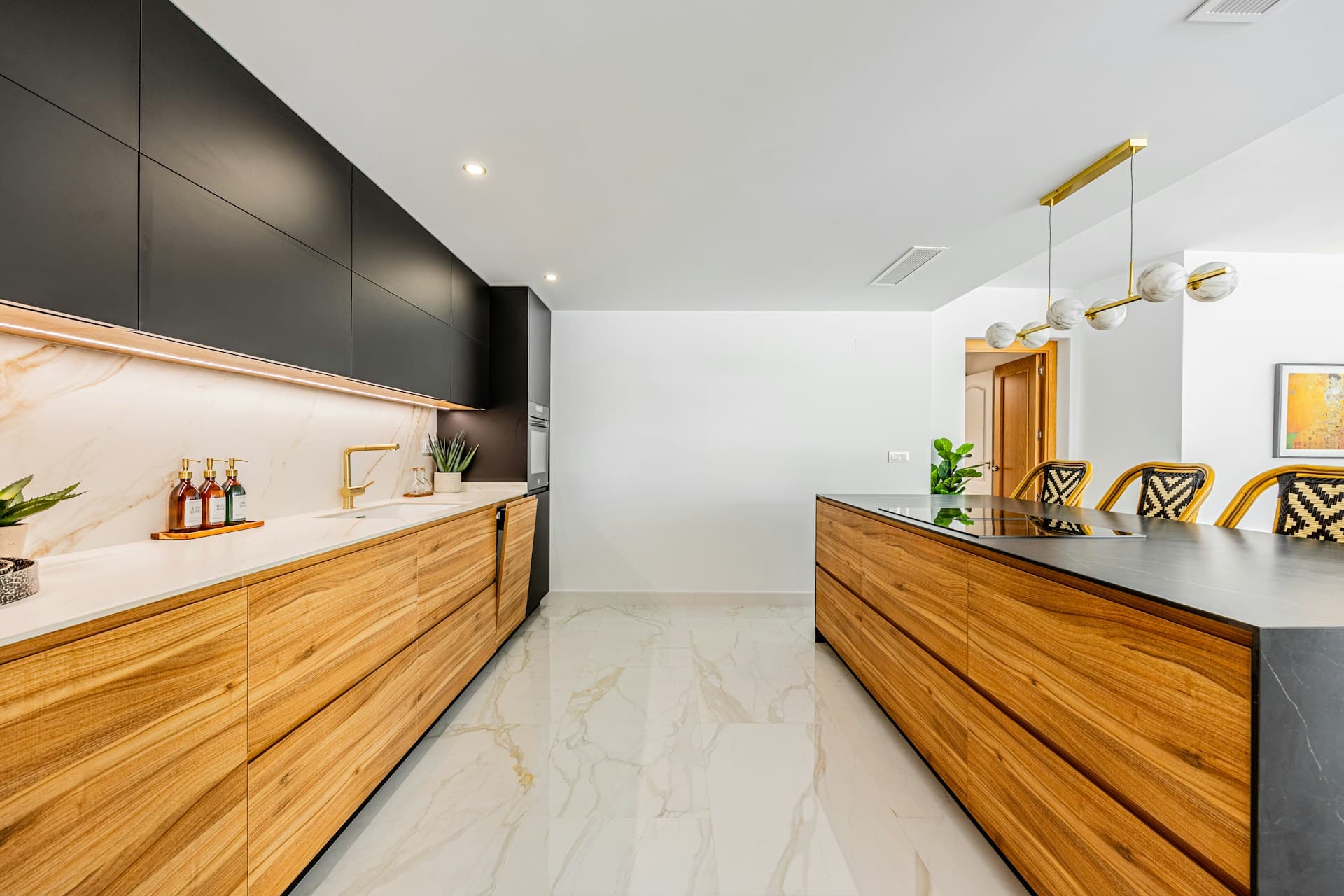
Over the past three years, full-height slab backsplashes have evolved from occasional luxury-home feature to mainstream aspiration across Palm Beach County. Instead of the traditional approach, stone counters with tile, glass, or complementary material backsplashes, this trend runs the same stone used for countertops up the wall, creating a seamless, monolithic look that showcases the material's full beauty. The effect is undeniably dramatic: a Calacatta marble slab rising from counter to ceiling transforms a kitchen wall into artwork. Quartzite with dramatic veining becomes an architectural statement. Even simpler granites gain visual weight and luxury presence when displayed vertically across 18-24 inches of wall space. We're installing full-slab backsplashes in Boca Raton penthouses, Jupiter waterfront estates, and increasingly in mid-market Wellington and Delray Beach renovations where homeowners want that custom, high-end look. But this trend isn't universally appropriate. It requires careful design consideration, adds significant cost, and works better with certain materials and kitchen layouts than others. Understanding when and how to use full-slab backsplashes separates thoughtful design from trend-chasing that might feel dated in five years.
Visual Impact: When It Works and When It Doesn't
Full-slab backsplashes achieve maximum impact with visually interesting materials: dramatic marbles like Calacatta or Statuario, quartzites with bold veining or color variation, or exotic granites with significant movement. The vertical display showcases these patterns in ways horizontal countertops can't. Materials with horizontal flow or wave-like patterns look particularly stunning when oriented vertically. Conversely, subtle materials like plain white quartz or uniform granite gain less from the full-slab treatment. You're paying premium installation costs to display a relatively simple surface. The trend works best in specific design contexts: modern and contemporary kitchens where clean lines and material focus dominate; transitional spaces that can handle dramatic features; and luxury settings where the backsplash becomes an intentional focal point. It struggles in traditional kitchens where ornate tile or decorative details might feel more appropriate, in small kitchens where large stone expanses overwhelm the space, and in very busy kitchens where the backsplash will be obscured by utensils, knife blocks, appliances, and the daily clutter of cooking life. In Palm Beach Gardens and Wellington homes, we guide clients through honest assessments: will this backsplash be visible and appreciated, or will it end up largely hidden behind functional kitchen necessities?
See the Slabs
Want to see what this looks like in your kitchen?
500+ slabs in our Boynton Beach showroom. Browse the live inventory or book a private viewing.
Material Selection for Backsplash Success
Not all countertop materials translate equally well to vertical backsplash applications. Marble and quartzite are ideal candidates. Their natural veining and movement create visual interest when displayed vertically, and fabricators can orient slabs to showcase the most dramatic sections. Book-matching or mirror-matching sections creates especially stunning backsplash installations where the pattern flows symmetrically from a central seam. Granite works well when patterns have directional flow or interesting color variation; uniform granites are less compelling. Quartz can work in full-slab applications, but its engineered consistency means you're not gaining the unique veining and pattern variation that makes stone backsplashes special. In many cases, large-format tile in similar patterns costs far less with comparable visual results. Porcelain slabs are increasingly popular for backsplashes due to their thinness (easier installation on walls) and availability in dramatic marble-look and exotic patterns at lower costs than natural stone. For backsplashes behind ranges or cooktops, we need to consider heat resistance. Marble can discolor from repeated heat exposure, while granite and quartz handle it better. In Delray Beach and Boca Raton installations, we're seeing increased interest in book-matched quartzite backsplashes, where the mirror-image veining creates almost kaleidoscopic visual effects.
Installation Challenges and Costs
Installing full-slab backsplashes is significantly more complex than laying tile, which translates to higher costs and longer installation times. The slabs must be precisely cut to fit the wall space, accounting for outlets, switches, and any architectural irregularities. We template walls just as carefully as countertops, using laser measurements to ensure proper fit. The installation requires heavy-duty adhesives and often mechanical support. Full-height slabs are heavy, and gravity works against vertical installations. For materials over 20mm thick or installations exceeding 20 inches in height, we typically install metal support brackets anchored into wall studs. The slabs must be perfectly level and plumb, as any deviation becomes immediately obvious in the large, unbroken surface. Seams in backsplash installations are harder to hide than counter seams because they're at eye level and well-lit by under-cabinet fixtures. For these reasons, full-slab backsplashes add meaningfully to installation costs depending on linear footage, material type, and complexity. A typical cooking zone backsplash in quartzite represents a moderate premium; a full-wall installation in a luxury kitchen adds substantially more. This investment makes sense when the material and design justify it, but it's worth evaluating honestly whether tile or other backsplash options might serve your needs at a fraction of the cost.
Design Integration: Making It Feel Intentional
The difference between a full-slab backsplash that feels like thoughtful design versus trendy excess often comes down to integration with the overall kitchen aesthetic. The most successful installations limit the full-slab treatment to focal areas: behind the range or cooktop where it functions as a dramatic hood surround, or along a featured wall section rather than wrapping the entire kitchen. This creates an intentional accent rather than overwhelming the space. We also see beautiful results when the backsplash material differs from the counter material: white quartz counters with a Calacatta marble backsplash, or neutral granite perimeters with a dramatic quartzite backsplash behind the range. This mixed-material approach provides focal drama without the cost of treating all surfaces to exotic stone. Edge details matter too. Some fabricators finish the top edge of the backsplash with a subtle bevel or eased profile rather than leaving it raw, creating a more finished appearance. In Jupiter and Tequesta contemporary homes, we're seeing full-slab backsplashes integrated into open shelving designs, where the stone extends up the wall and wooden shelves mount directly to it, creating a cohesive material story.
Is a Full-Slab Backsplash Right for Your Kitchen?
Deciding whether to invest in a full-slab backsplash requires honest assessment of several factors. First, do you have material worth showcasing? If you're using dramatic Calacatta, exotic quartzite, or visually interesting granite, the vertical display adds significant value; if you're using simple white quartz or subtle granite, the return on investment is questionable. Second, will the backsplash actually be visible? If your counters are crowded with appliances, utensil holders, and daily clutter, or if upper cabinets leave only a narrow band of wall space, you're not getting the visual benefit that justifies the cost. Third, what's your budget reality? Full-slab backsplashes are genuine luxury features: beautiful and impressive, but not essential for a functional, attractive kitchen. If the cost stresses your budget or requires sacrificing other important elements, tile or alternative treatments might be wiser choices. Fourth, consider your home's overall market and style. In Palm Beach luxury properties, full-slab backsplashes are increasingly expected at certain price points; in more modest markets, they might read as over-improvement. We work with clients to make these assessments honestly, sometimes recommending against full-slab treatments when the conditions don't support them. When they do make sense, the right material, in the right space, with budget to support it, full-slab backsplashes create some of the most memorable kitchens we install. Interested in exploring whether this trend fits your kitchen? Visit our showroom to see full-slab installations in our display area and discuss whether the investment aligns with your design goals and budget realities.