Free Showroom Visit
See this material in person at our Boynton Beach showroom.
500+ slabs in stock. We'll walk you through the differences and help you find the right one for your kitchen. No pressure, no sales pitch.
★★★★★ 5.0 · 586+ Google reviews · Family-owned since 2008
The Italian Marble Confusion: Why Names Matter
Walk into any high-end kitchen showroom and you'll hear 'Carrara' and 'Calacatta' thrown around, often interchangeably. This drives those of us who work with the actual stone crazy, because while both are white Italian marbles with gray veining, they're distinctly different materials with different costs, availability, and visual impact. The confusion is understandable. Both names reference Italian regions (Carrara is a city, Calacatta describes marble from certain quarries in that region), and photos online are often mislabeled. We've had clients arrive at our Boynton Beach slab yard requesting 'Carrara' who clearly want Calacatta's dramatic veining, and vice versa. Getting the terminology right matters because Calacatta can cost 2-4 times more than Carrara, and showing up for template day with the wrong expectation creates problems. Both marbles originate from the Apuan Alps in Tuscany, both have been quarried for millennia (Michelangelo used Carrara for David), and both are legitimate luxury materials. But understanding their differences helps you articulate your design vision accurately and allocate your budget appropriately.
Visual Differences: How to Tell Them Apart
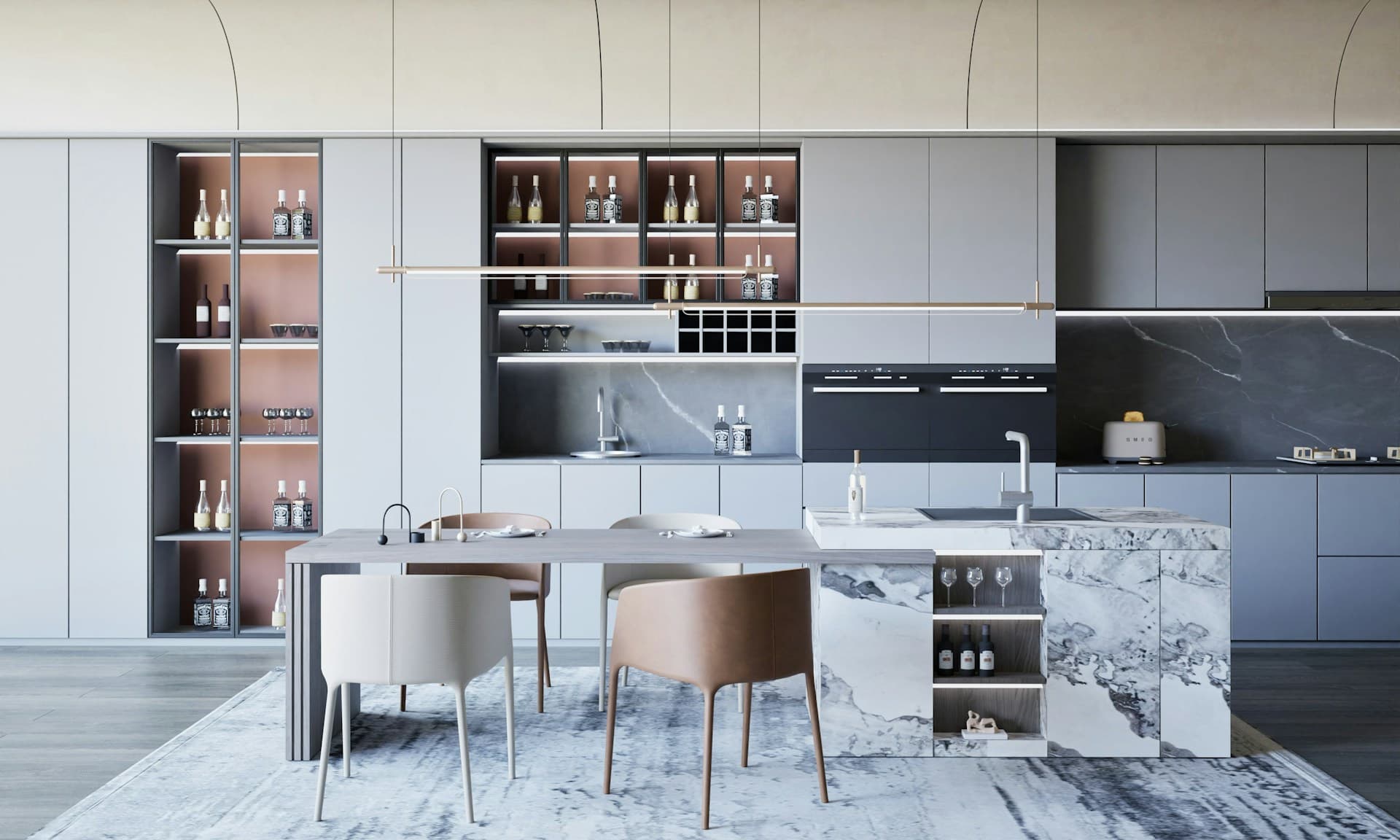
The quickest way to distinguish Carrara from Calacatta is by background color and veining. Carrara has a grayish-white or blue-gray background with soft, feathery gray veining. The overall effect is subtle and elegant. The veining blends into the background rather than contrasting sharply. Stand back from a Carrara slab and you see a cohesive soft-gray surface; the veining adds texture without dominating. Calacatta, by contrast, has a brighter, whiter background, almost pure white in the highest grades, with bold, dramatic veining in shades of gray and often gold or taupe. The veining is the star of the show: thick, dramatic, intentional-looking strokes that create strong visual movement across the slab. Calacatta feels more active and statement-making, while Carrara feels serene and classical. In our showroom, we place Carrara and Calacatta slabs side by side for comparison, and even first-time buyers immediately recognize the difference in drama level. For design purposes, think of Carrara as the sophisticated background player that elevates everything around it, while Calacatta is the centerpiece that demands attention and frames the entire design.
See the Slabs
Want to see what this looks like in your kitchen?
500+ slabs in our Boynton Beach showroom. Browse the live inventory or book a private viewing.
Price and Availability: The Practical Differences
Calacatta's price reflects its relative rarity and high demand. While Carrara sells at accessible luxury pricing in Palm Beach County, Calacatta commands two to four times more depending on the specific type and vein quality. Why such a difference? Calacatta quarries produce far less material than Carrara quarries, and only a fraction of what they extract meets the quality standards for premium countertop fabrication. There are also several Calacatta varieties: Calacatta Borghini, Calacatta Gold, Calacatta Macchia Vecchia, each with distinctive characteristics and different price points. Carrara, while still a premium material, is relatively abundant and consistently available. This abundance also means easier matching if you need additional material later for renovations or repairs. In practical terms, if you're working within a moderate countertop budget for a typical Palm Beach County kitchen, Carrara is realistic while Calacatta would require either a smaller kitchen or supplementing with other materials (Calacatta island with white quartz perimeters, for example). For luxury budgets where premium countertop investment is comfortable, Calacatta delivers unmatched dramatic beauty that justifies the investment.
Design Applications: When to Choose Each
Carrara excels in spaces seeking timeless, classical elegance without overwhelming other design elements. It's the right choice for traditional kitchens, bathrooms where you want spa-like serenity, and designs where the marble is one of many beautiful materials rather than the singular focal point. Carrara pairs beautifully with both white and colored cabinetry, works in small and large spaces without overwhelming, and has a proven track record of aging gracefully. Those soft gray tones develop a lovely patina over decades of use. In Delray Beach and Boca Raton traditional homes, Carrara bathrooms and kitchen perimeters remain perennially sophisticated. Calacatta, on the other hand, demands to be featured. It's the ideal choice for statement islands that anchor open-concept designs, full-height backsplashes that create dramatic focal walls, or primary bathroom vanities where morning routines deserve theatrical backdrops. Calacatta works best in spaces with relatively simple cabinet designs and restrained color palettes. The marble provides all the visual interest needed. In Palm Beach oceanfront penthouses and Jupiter luxury estates, Calacatta islands with book-matched veining create the kind of 'wow' factor that elevates the entire property.
Maintenance Reality: Both Require Commitment
Here's the truth many designers soft-pedal: both Carrara and Calacatta are marble, which means both will etch when acidic substances contact the surface, both can stain if spills aren't promptly cleaned, and both develop patina over time. If you're not prepared for this reality, choose quartzite or quartz instead. No amount of sealing will make marble behave like engineered stone. That said, Carrara's softer, more varied coloring tends to hide etching and minor stains better than Calacatta's bright white background, where every mark is more visible. This is why some designers recommend Carrara for kitchens with serious cooking activity while reserving Calacatta for bathrooms or occasional-use wet bars. Both materials require sealing at installation and resealing annually or when water no longer beads on the surface. Use pH-neutral cleaners only, never acidic or alkaline products. Wipe spills immediately, especially citrus, wine, coffee, and tomato-based foods. Many Palm Beach County marble owners embrace the developing patina as authentic character; if you're in the 'keep it pristine' camp, marble may frustrate you regardless of which variety you choose.
Making Your Choice: Questions to Ask Yourself
Deciding between Carrara and Calacatta comes down to several key questions. First, what's your budget? If Calacatta stretches finances uncomfortably, Carrara delivers marble luxury at a more accessible price. No shame in choosing the more affordable of two premium materials. Second, what's your design vision? Do you want the countertop to be a subtle, elegant foundation (Carrara) or a bold, dramatic centerpiece (Calacatta)? Third, how will you actually use the space? Daily-use family kitchens with kids, homework, and constant activity might benefit from Carrara's forgiving nature, while formal spaces or carefully maintained kitchens can showcase Calacatta's pristine beauty. Fourth, what's your maintenance commitment? Both require care, but Calacatta's bright white background shows imperfections more readily. Finally, consider your home's overall style and market positioning. In Wellington or Royal Palm Beach, Carrara reads as appropriately luxurious; in Palm Beach or Gulf Stream oceanfront properties, Calacatta's drama may be expected at certain price points. At our Boynton Beach showroom, we maintain both Carrara and Calacatta slabs so you can see the actual materials, not just photos. We'll show you how light affects each, how veining varies across slabs, and help you make the choice that aligns with your aesthetics, budget, and lifestyle. Schedule a viewing to explore these beautiful Italian marbles in person and determine which belongs in your home.