Side-by-Side at the Showroom
See both materials in person before you decide.
Touch the slabs, see the veining in natural light, and get an honest fabricator's opinion. Free 30-minute showroom consultation.
★★★★★ 5.0 · 586+ Google reviews · Family-owned since 2008
The Great Debate: Beauty vs. Durability
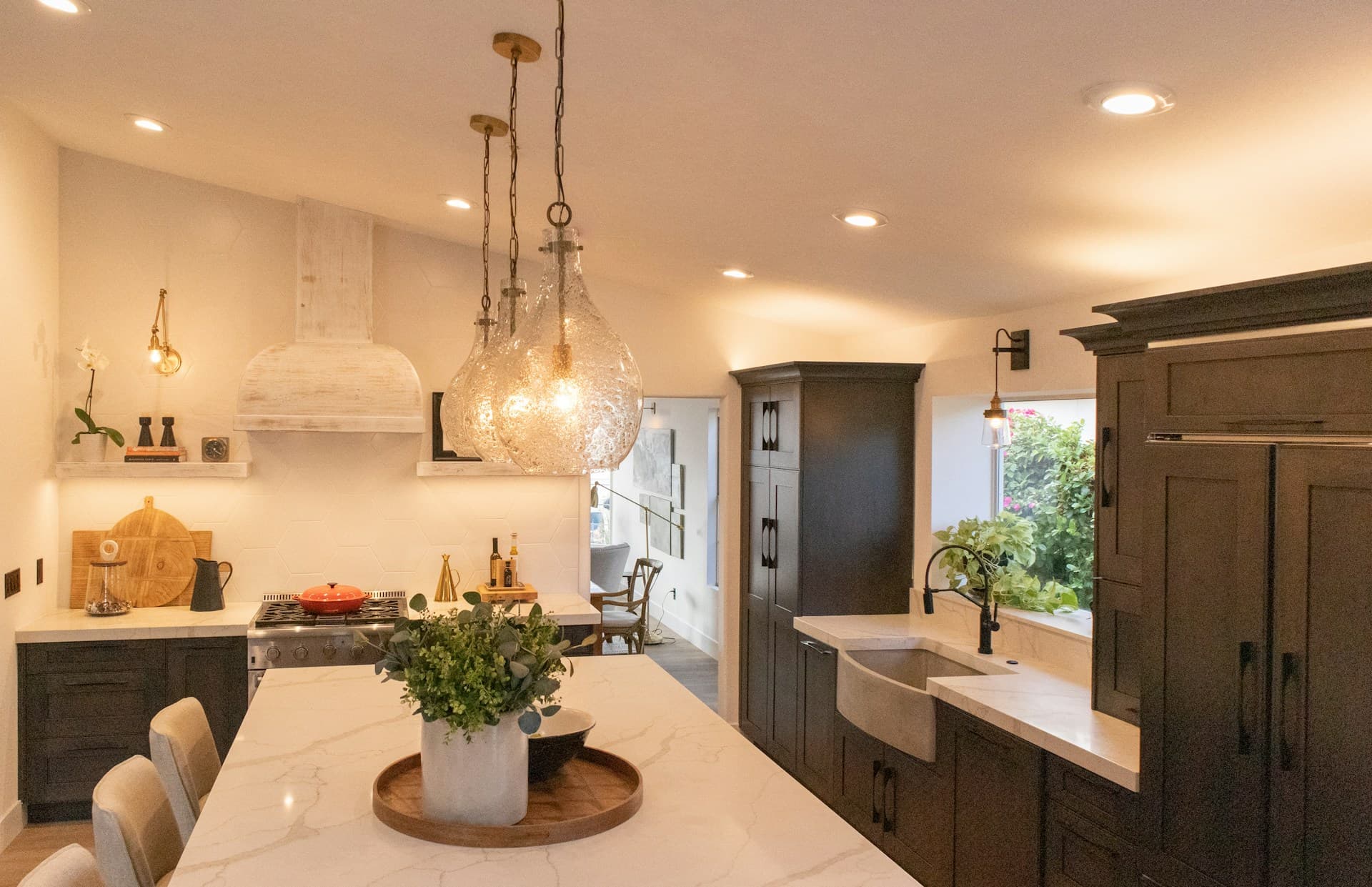
Marble and quartzite represent two ends of the natural stone spectrum. Marble, composed of calcium carbonate, delivers unmatched elegance with its soft veining and luminous depth. Quartzite, metamorphosed sandstone, offers marble's visual drama with granite-level durability. In our Boynton Beach showroom, we guide 500+ clients annually through this decision, and the answer always depends on lifestyle. We've installed both materials in over 10,000 Palm Beach County kitchens since 2008, and the performance data is clear: marble requires committed maintenance and tolerance for patina development, while quartzite performs like granite while looking like marble. The cost difference is narrowing: Carrara marble is accessibly priced for a luxury stone, while marble-look quartzites like Taj Mahal sit slightly higher. For a modest per-square-foot premium, you gain extraordinary durability. But for some clients, only real marble will do. Let's break down the specifics.
Durability and Heat Resistance: The Performance Gap
Quartzite rates 7 on the Mohs hardness scale, making it harder than granite (6-6.5) and significantly harder than marble (3-4). In practical terms: marble scratches from knife blades and cutting directly on the surface, while quartzite resists scratching from anything short of diamond or tungsten carbide. Both materials are heat-resistant, but quartzite handles extreme heat better (1,400°F+ vs. marble's 1,000°F limit). We've seen marble crack from rapid temperature changes when clients place frozen items directly on sun-heated stone near windows. Quartzite tolerates thermal shock better. The real performance gap appears with etching: marble's calcium carbonate reacts with acids (lemon juice, wine, tomato sauce, vinegar), creating dull spots that remove the polish. Quartzite, being primarily quartz, doesn't etch from acids. One Delray Beach client with Carrara marble calls us annually for professional honing and repolishing (a significant per-visit expense) to remove accumulated etching. Our Jupiter quartzite clients? Zero callbacks for damage in five years.
See the Slabs
Want to see what this looks like in your kitchen?
500+ slabs in our Boynton Beach showroom. Browse the live inventory or book a private viewing.
Veining, Movement, and Visual Drama
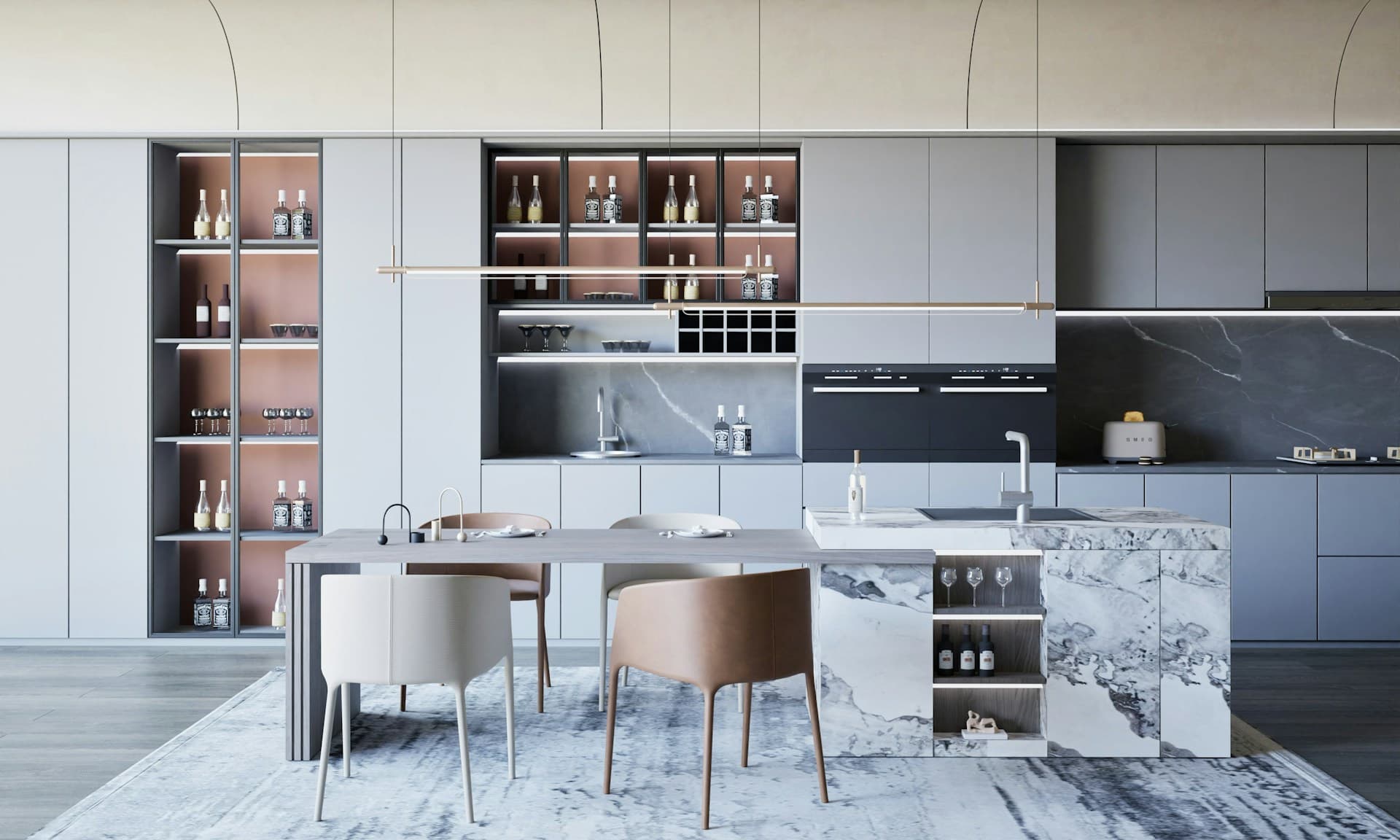
Marble's veining comes from mineral impurities and metamorphic pressure, creating organic, flowing patterns that have inspired artists for millennia. Carrara features soft gray veining, Calacatta displays bold gold and gray veining on white backgrounds, and Statuario offers dramatic, intersecting veins. No two slabs match perfectly, and that variation is part of marble's charm. Quartzite forms under different conditions, creating veining from iron oxide, mica, and other minerals. White quartzites (Taj Mahal, Sea Pearl, Super White) can convincingly mimic Carrara marble, while dramatic quartzites (Cristallo, Macaubas White) rival Calacatta's visual impact. The difference: quartzite veining tends toward more linear, stratified patterns due to its sedimentary origins, while marble veining flows more organically. In our showroom, we conduct blind tests where clients can't consistently distinguish polished Taj Mahal quartzite from Carrara marble at a glance. Under direct sunlight, marble's translucency creates unique depth that quartzite can't fully replicate. For maximizing visual drama while maintaining performance, book-matched quartzite installations rival or exceed marble.
Maintenance Requirements: Daily Reality Check
Marble demands immediate cleanup of acidic spills, annual professional sealing, and tolerance for etching as part of the stone's natural patina development. Some owners embrace this aged look; others find it frustrating. We recommend honed (matte) marble for kitchen counters, as etching is less visible than on polished surfaces. Quartzite requires sealing every 2-3 years for most varieties, with hard quartzites like Taj Mahal going 3-5 years between applications. Daily maintenance is identical: both clean with pH-neutral soap and water. The difference emerges during cooking: with marble, you're constantly aware of placing cutting boards under acidic prep, using trivets for wine bottles, and wiping spills within minutes. With quartzite, you cook normally. One West Palm Beach client with teenage kids replaced Calacatta marble with Cristallo quartzite after two years of etching from sports drinks, citrus, and general neglect. Their quartzite has survived three years of teenager abuse without a single etch mark. For busy families, quartzite wins on maintenance alone.
Cost Comparison and Long-Term Value
Carrara marble is priced at the accessible end of luxury stone, Calacatta commands a meaningful premium, and rare Statuario sits at the top of the marble market. Commercial quartzites start at approachable price points, with premium options (Taj Mahal, Perla Venata) in the mid-range and exotic varieties commanding ultra-premium pricing. The initial cost gap is minimal when comparing similar visual drama: Carrara marble versus Taj Mahal quartzite differs by only a modest per-square-foot premium. However, long-term costs favor quartzite: annual marble honing and repolishing is a significant recurring expense, while quartzite needs only periodic sealing every 2-3 years at a fraction of the cost. Over a 10-year period, marble maintenance costs many times more than quartzite maintenance. Resale value in Boca Raton and Palm Beach Gardens strongly favors white quartzite, as buyers perceive it as 'marble without the problems.' Appraisers value quartzite and marble identically, but time-on-market data from local realtors shows quartzite kitchens sell 8-12% faster. For primary residences where you'll live 10+ years, the maintenance cost difference funds a significant vacation. For pre-sale renovations, both materials add comparable value, but quartzite's no-maintenance reputation helps during showings.
Best Use Cases: When to Choose Each Material
Choose marble if you're a baking-focused household (pastry chefs love marble's cool surface for dough work), embrace patina as part of the stone's story, prioritize authentic historical aesthetics (marble has 4,000 years of architectural pedigree), and commit to mindful maintenance. Marble excels in powder rooms, low-use wet bars, and bathroom vanities where acidic exposure is minimal. Choose quartzite if you cook frequently with acidic ingredients, have a busy household with kids, want marble's look without etching concerns, plan to live in the home 5+ years (maintenance savings compound), or need heat resistance for hot pans near cooktops. In Wellington and Palm Beach Gardens, we're seeing 70% of clients who initially want marble switch to quartzite after seeing performance data and actual slabs. The remaining 30% are marble purists who want the real thing regardless of maintenance. Both are valid choices; the key is making an informed decision. We never sell marble without a comprehensive maintenance disclosure signed by the client.
Compare Both Materials in Person at Our Showroom
See 200+ marble and quartzite slabs side-by-side in our Boynton Beach showroom. We'll show you etching demonstrations on marble samples, discuss realistic maintenance expectations, and help you select the material that matches your lifestyle and cooking habits. Use our online estimator at /estimator to compare pricing for both materials, then book a viewing at /book-viewing to make your final selection. With over 10,000 kitchens templated across Palm Beach County, we've guided thousands of clients through this exact decision. We'll make sure you're thrilled with your choice five years from now, not just on installation day.